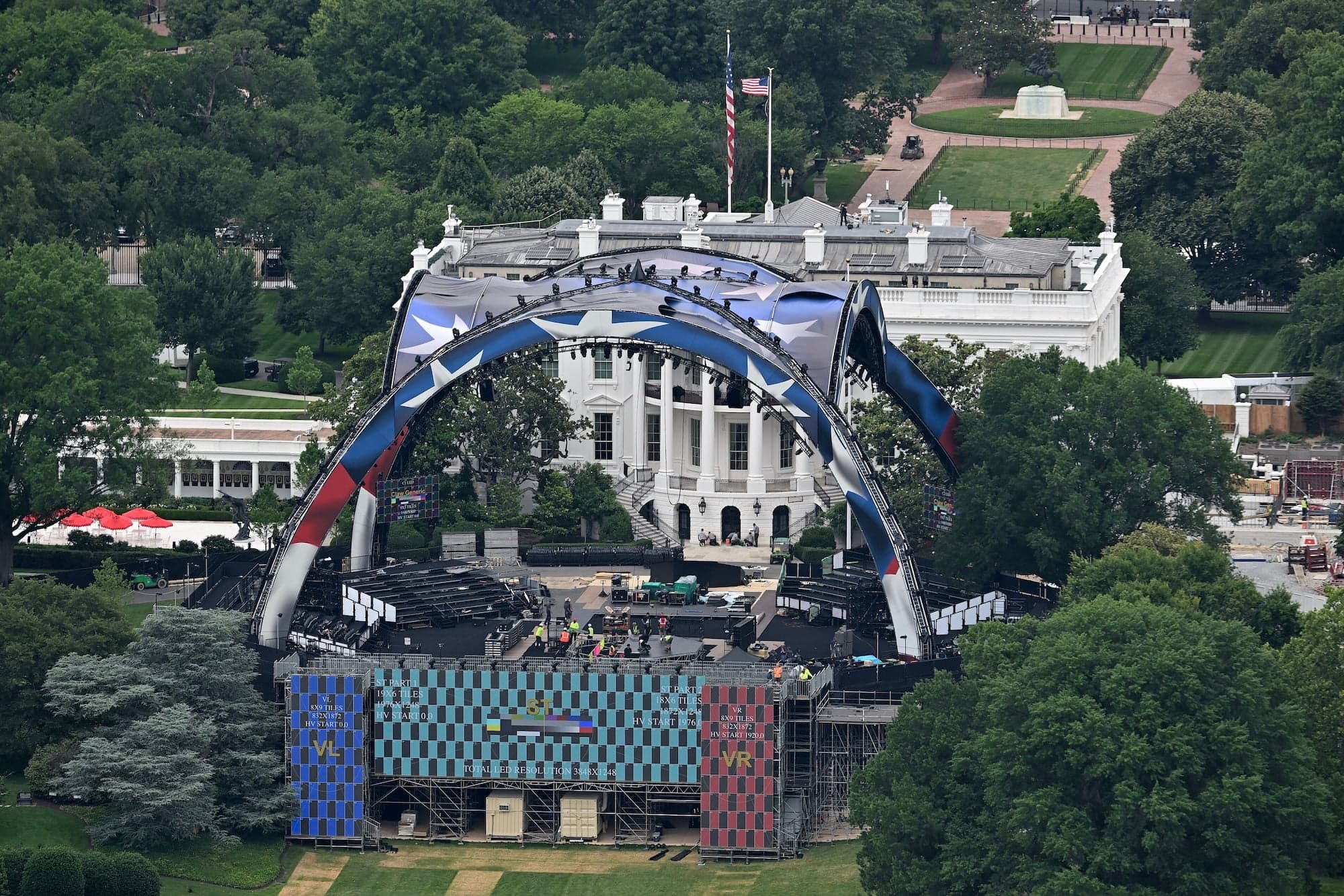
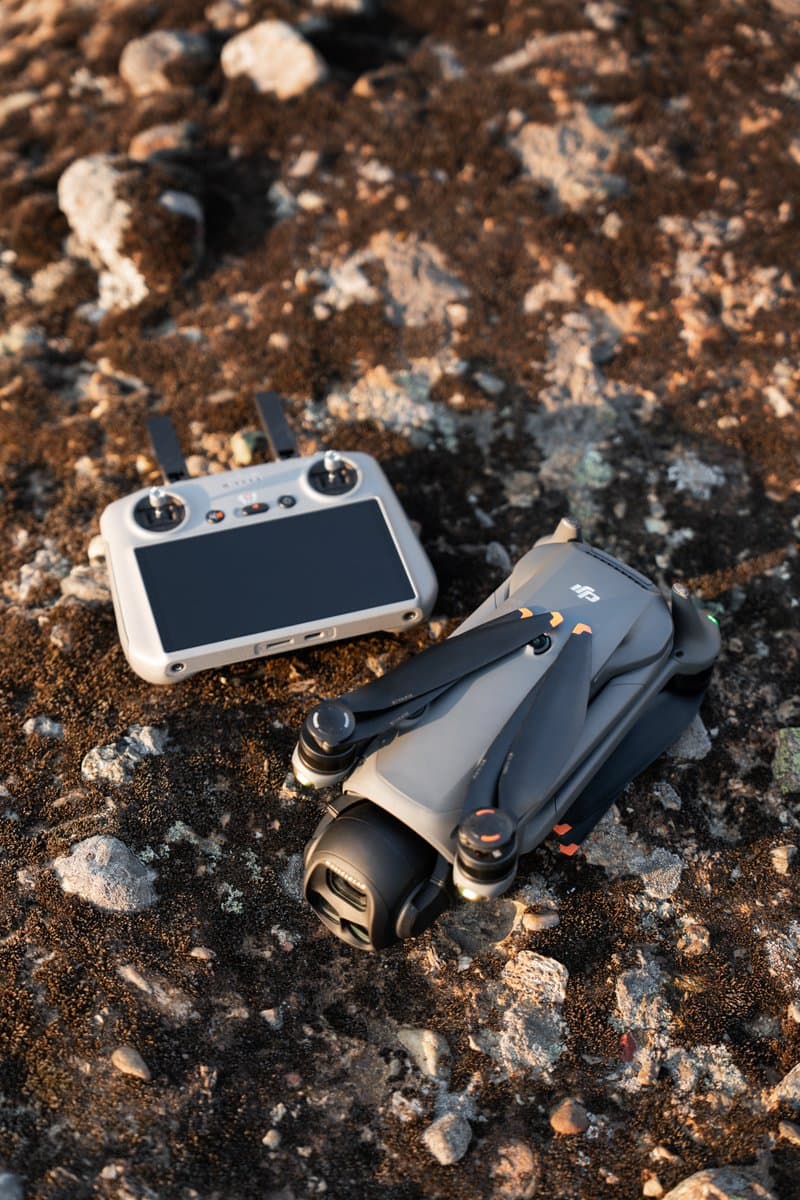
DOJ Indicts Five Men for Alleged Plot to Deploy Explosive Drones at White House UFC Event — Indictment Reveals Clear Intent but Severely Limited Drone Capability
The U.S. Department of Justice has charged five men across four federal districts for allegedly conspiring to release explosive-laden drones during the UFC Freedom 250 event at the White House, followed by sniper attacks on fleeing crowds. While defendants possessed real firearms and target lists, the indictment reveals the group's drone capability was almost nonexistent — just one drone and an unconfirmed $1,300 crowdfunding plan among five suspects.

Highlights
- The DOJ indicted five men across four U.S. states for conspiring to attack the White House UFC Freedom 250 event using explosive drones followed by sniper fire, with each defendant facing up to life in prison.
- At the time of arrest, the group possessed only one drone and an unconfirmed $1,300 crowdfunding plan — no completed explosive drone device was documented in any of the four indictments.
- Agents seized rifles, handguns, shotguns, body armor, extended magazines, and thousands of rounds of ammunition from multiple defendants, indicating the conventional firearms threat was far more developed than the drone component.
- The alleged plot called for 15 operators across five three-person teams (sniper, spotter, drone operator), but only five individuals were arrested and charged.
- The FY2026 NDAA and FEMA's $500 million counter-drone program are expanding law enforcement drone-interdiction authority nationwide, directly impacting legitimate Part 107 operators through new flight restrictions.
DOJ Charges Five Men in Alleged Drone Attack Conspiracy Targeting White House UFC Event
The U.S. Department of Justice filed charges Tuesday against five men accused of conspiring to deploy explosive-laden drones during the UFC Freedom 250 event at the White House, followed by pre-positioned snipers shooting at fleeing spectators. Criminal indictments spanning four federal judicial districts name the defendants and detail their alleged planning on encrypted messaging applications, as well as weapons seized by law enforcement. However, the indictments also reveal a critical detail overlooked in early reports: at the time of FBI intervention, the group possessed firearms and annotated target maps, but no completed explosive drone was documented — the planned assembly operation had not been carried out, and actual membership fell far short of the numbers the plan required.
Five Defendants Charged Across Four States
The DOJ's statement identified the five defendants by name, age, and location. Arrests were made over the weekend in Ohio, Missouri, Nebraska, and California — not at a single location — correcting early reporting that framed the case around a single arrest in Cincinnati.
The five defendants are:
- Tycen C. Proper, 19, Danville, Ohio
- Bryan Omar Roa, 24, Calimesa, California
- Michael Alan Thomas, 32, Pinon Hills, California
- Daniel K. Eskridge, 32, Kidder, Missouri
- Abraham Hermosillo Alvarez, 31, Omaha, Nebraska
According to the DOJ, the five men conspired to cause mass casualties at the combat sports event in an attack targeting U.S. officials. Prosecutors described a plan to first detonate drones to trigger an evacuation, then have snipers fire on high-value targets in the resulting chaos. Acting Attorney General Todd Blanche stated that law enforcement successfully stopped the plot before it could be carried out. Secret Service Director Sean Curran noted that threats against protectees have increased sharply in recent months.
If convicted of conspiracy to commit murder, each defendant faces a maximum sentence of life in prison and a $250,000 fine. A separate charge of conspiracy to commit violence within the White House perimeter carries a maximum five-year sentence.
Indictment Shows Drone Role Existed Largely on Paper
Across the four charging documents, the drone component reads more like an aspiration than a demonstrated capability. The group discussed mounting explosives on small drones and detonating them on the north side of the venue, but documents indicate the alleged ringleader was still in the process of building drones — not commanding a ready-to-fly fleet. This is a crucial distinction, given that media coverage framed the case as a "drone attack" plot, when the hardware was in fact the least developed element of the entire scheme.
Prosecutors allege the conspiracy began to take shape in approximately March, before moving to an encrypted messaging app. Thomas allegedly wrote on June 7: "$1,300 can get us drones and ammo," urging members to pool funds and act quickly. Eskridge allegedly sketched out a structure of "five teams of three" — each comprising a sniper, a spotter, and a drone operator — all to be funded by that same $1,300. The plan called for 15 people across 15 positions; only five were arrested.
Alvarez, allegedly operating under the callsign "Shepherd," was described as the operational coordinator, responsible for directing teams to map-marked positions. When a member asked how to arm the drones, he allegedly replied: "As much as possible, as deadly as possible." He also claimed to own one drone and to be building more. One drone — days away from an event the group planned to converge on. Intent in the chat logs was unambiguous; operational capability was nowhere near ready.
Seized Weapons Confirm the Firearms Threat Was Real
In contrast to the nascent drone capability, the firearms picture was starkly different. Agents executing search warrants recovered rifles, handguns, shotguns, extended magazines, thousands of rounds of ammunition, body armor, and tactical gear from multiple defendants' residences. Proper allegedly stockpiled weapons and thousands of rounds at his Ohio home and had named congressional representatives as attack targets.
This asymmetry is central to understanding the case: a group with real firearms and a real target list organized itself around a drone-opening-act that had barely begun to materialize. The counter-drone debate that has captured national attention is built on the least-developed component of the entire plot. The conventional weapons threat had advanced far further — snipers on rooftops would have been no less lethal.
On the question of motive, the indictment points to deep grievances against the government. Members allegedly discussed assassinating members of Congress and corporate executives, with particular focus on legislators they believed had received pro-Israel lobbying funds. The electrical grid was mentioned as a secondary target. This is a domestic extremism case that used drones as a flashpoint — not a drone attack in any technical sense.
The Case Arrives at a Critical Moment for U.S. Counter-Drone Expansion
Weaponized consumer drones have rapidly migrated from overseas battlefields into domestic U.S. threat assessments. DroneXL has tracked this trend closely, including Mexican cartel deployment of FPV attack drones and counter-drone systems costing hundreds of thousands of dollars; the Pentagon has also warned that adversaries can convert off-the-shelf commercial drones into weapons for just a few hundred dollars. That figure now has a domestic echo: the alleged budget the five defendants set aside for drones and explosives was $1,300.
The legal and funding apparatus built around this threat is substantial. The FY2026 National Defense Authorization Act grants state and local law enforcement new authority to detect, track, and neutralize drones at large public gatherings. FEMA's $500 million counter-drone program has disbursed first-round funding to World Cup host states and the National Capital Region for "America 250" celebration events. The FAA has also activated more than 100 World Cup flight restrictions covering stadiums and team hotels.
For legitimate operators, this infrastructure carries real costs. Credentialed Part 107 pilots were grounded the moment World Cup flight restrictions took effect on June 1, before the FAA belatedly added a DHS authorization pathway. The five men indicted this week never filed any flight authorization request. The pilots absorbing losses from these restrictions had, by definition, followed the rules.
DroneXL Perspective
The initial report published on the day of the arrests — sourced only from FBI statements and anonymous official background briefings — noted that the gap between chat-log discussions and a deployable explosive device was the most important detail to watch once an indictment became public. That indictment has now confirmed the gap exists. The defendants possessed firearms, target lists, and annotated maps. On the drone side, they had one aircraft, a $1,300 crowdfunding plan that may never have been completed, and a roster of 15 operators who were never actually recruited.
The intent to kill was unambiguous and specific. The drone capability had barely begun.
This distinction is also where reasonable analysis diverges from the extreme positions circulating online. The minimizing narrative — five guys, one drone, proves everything was overblown — ignores the rifles, the ammunition stockpiles, and the named congressional targets in the same indictment. The maximizing narrative — this case validates every counter-drone expenditure — ignores the fact that drones were the least-developed part of the plot, and that what stopped the conspiracy was human intelligence, not sensors. A real threat does not automatically justify a specific procurement. Both things can be true simultaneously, and DroneXL has held that line since FEMA grant funding was first announced.
What the indictment does not answer is whether the explosive drones were ever within this group's actual reach, or whether they were forum-style fantasy — a question prosecutors will still need to prove in court. The documents state only that one defendant owned one drone and was "building more"; they do not establish that an explosive device existed, was tested, or was functional. That is the core evidentiary question on the drone-specific charges, and it is the detail most worth tracking as the cases proceed through the Southern District of Ohio, the Western District of Missouri, the District of Nebraska, and the Central District of California. The firearms case appears well-documented on the face of the indictment. The drone case still needs to prove the drones existed.
Source: U.S. Department of Justice (Office of Public Affairs, Press Release No. 26-657)
Correction: DroneXL's initial report published June 16 described the case as centered on a single Cincinnati arrest and cited anonymous officials referencing 23 individuals. Per the DOJ's formal charging documents, five defendants are located across Ohio, Missouri, Nebraska, and California. This article is based on the primary indictments.
原文來源: 查看原文
FAQ
Newsletter
Subscribe to our Low-Altitude Industry Newsletter
Daily curated news on low-altitude economy and drone industry, delivered to your inbox.