Franco-German Rift Threatens Eurodrone and MGCS Tank Programme After €100 Billion Sixth-Generation Fighter Collapses
Franco-German defence cooperation is under severe strain. Following the collapse of the joint sixth-generation fighter programme FCAS in June 2026, the European MALE drone programme Eurodrone is now in crisis — with Dassault's CEO accusing Airbus of trying to push the company out. Meanwhile, France is reportedly considering withdrawing from the next-generation tank programme MGCS, putting all three of Europe's flagship joint defence projects at risk of failure.

Highlights
- The FCAS sixth-generation fighter programme — valued at up to €100 billion — was officially declared dead in June 2026 after Dassault and Airbus failed to agree on work-share allocation.
- Dassault Aviation CEO Éric Trappier told the French Senate on 1 July 2026 that Airbus had attempted to push Dassault out of the Eurodrone MALE drone programme, and that inter-partner relations had broken down.
- France's 2024–2030 Military Programming Law significantly reduced French orders for Eurodrone, triggering a compensation dispute between Dassault and Airbus under OCCAR contract rules.
- Rheinmetall CEO Armin Papperger warned that France may withdraw from the MGCS next-generation tank programme, noting that participating shareholders have received only €25 million in total funding since the programme's 2017 launch.
- All three major Franco-German joint defence programmes — FCAS, Eurodrone, and MGCS — are stalled or collapsed, driven by industrial work-share disputes, mismatched operational requirements, and diverging national strategic priorities.
Franco-German Rift Threatens Eurodrone and MGCS Tank Programme After €100 Billion Sixth-Generation Fighter Collapses
US President Donald Trump's sharp criticism of European allies had once led many to expect France and Germany to accelerate defence cooperation and advance European strategic autonomy. Yet despite some coordination on nuclear deterrence and the Greenland issue, the Franco-German relationship has remained in a state of uneasy tension.
The Carnegie Europe think-tank's Strategic Europe blog noted last month: "They continue to wrestle with mismatched leadership personalities, diverging domestic political trajectories, and fundamental differences in deep national strategic cultures."
At the heart of the friction lies a fundamental divergence in strategic outlook: France has consistently championed European strategic autonomy, while Germany remains more reliant on the transatlantic alliance. The two countries also frequently clash over EU-level decisions on fiscal rules, industrial policy, and market access.
Both nations' inability to effectively rein in their powerful domestic defence industries has pushed three major joint European defence programmes — Eurodrone, the Future Combat Air System (FCAS), and the Main Ground Combat System (MGCS) — into serious difficulty. One has already been declared dead; the other two face the risk of failure.
FCAS Collapses, Franco-German Defence Cooperation in Full Crisis
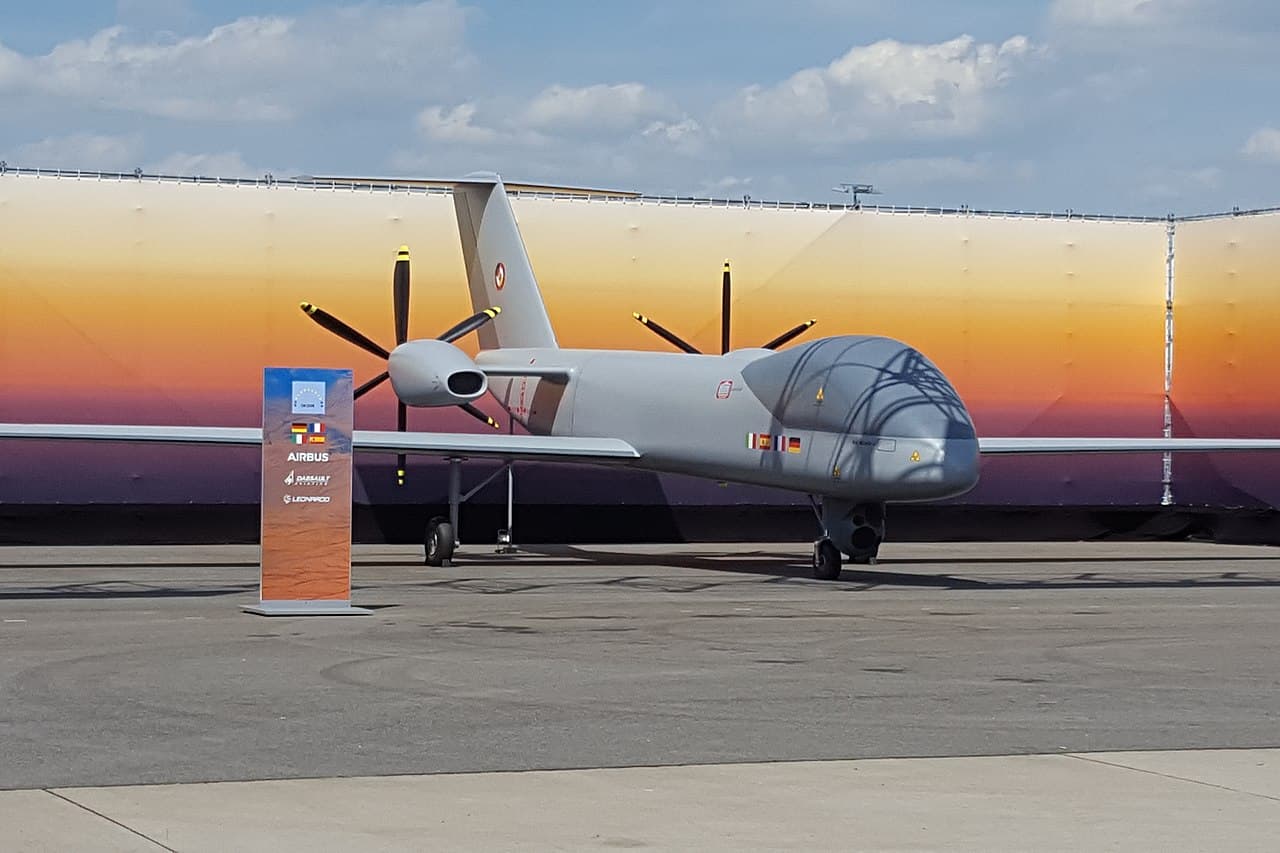
The European multi-nation Medium-Altitude Long-Endurance (MALE) drone programme Eurodrone — involving France, Germany, Italy, and Spain — suffered another serious blow this week. Dassault Aviation CEO Éric Trappier, appearing before the French Senate on 1 July 2026, stated that Airbus had attempted to push Dassault out of the multinational programme.
"For us, things are very simple. Airbus told us to get out," Trappier told the Senate committee when asked about the long-delayed programme. "We disagree, and so we are in negotiations over our exclusion. I cannot tell you where the programme stands, because the relationship between the parties at the programme level has broken down."
Eurodrone was designed as a European-indigenous MALE remotely piloted aircraft system weighing 11 tonnes, intended to establish and sustain autonomous European drone development capability and reduce member states' dependence on US and Israeli platforms. The programme was formally launched in 2022, with procurement agency OCCAR awarding the contract to Airbus.
Under the work-share arrangement, Airbus Defence and Space is responsible for components, the airframe, final assembly, ground stations, and systems integration; Dassault Aviation handles safe take-off and landing systems, mission communications, and air-ground maintenance systems; while Italy's Leonardo covers sensors, mission systems, and ground control stations. One of the programme's original goals was to reduce Europe's dependence on the US-made MQ-9 Reaper drone.
Notably, Trappier warned senators that Eurodrone's future operational relevance could be significantly diminished, describing it as "quite an easy target to shoot down" in conflicts where air superiority is not assured.
"Eurodrone flying over the Sahel — yes, it has long endurance and excellent surveillance capability, and such a drone has its value. But in an armed conflict where air superiority is not absolute, or where ground threats remain, it is likely to be quite an easy target to shoot down," Trappier said.
The Senate testimony came after reports last month that Dassault had sought compensation from Airbus over programme changes. Under the original plan, the partners were to jointly develop 20 systems, each comprising three aircraft and two ground control stations — Germany receiving seven, Italy five, and France and Spain three each.
However, France's updated Military Programming Law (LPM) for 2024–2030, published in April, showed a significant reduction in French orders. Under the European defence contracting system, France's reduced procurement and delayed payments would proportionally shrink Dassault's work share, prompting the French firm to seek compensation from Airbus.
France's order cuts reflect concerns that the drone is too heavy, too expensive, and ill-suited to high-intensity warfare. The French Air and Space Force has expressed interest in smaller, cheaper, and more agile alternatives. In response, Airbus reiterated CEO Guillaume Faury's earlier statement that, following the French defence ministry's change of position, Eurodrone would "very likely continue in a slightly adjusted form."
The troubles surrounding Eurodrone mirror the recent collapse of the far more ambitious FCAS programme.
FCAS: The €100 Billion Sixth-Generation Fighter Dream Dies
The Future Combat Air System (FCAS) — a sixth-generation fighter programme pursued jointly by France, Germany, and Spain — was officially declared dead in June 2026, after both governments failed to break the deadlock between their industrial partners: Dassault Aviation (representing France) and Airbus Defence and Space (representing Germany and Spain).
First announced in 2017, FCAS was conceived as a "system of systems" valued at up to €100 billion (approximately USD 110 billion), centred on a Next Generation Fighter (NGF) and complemented by loyal-wingman drones and a cross-platform data-sharing "Combat Cloud."
The programme's initial division of labour was clear: Dassault would lead development of the NGF; Airbus would design the Remote Carrier loyal-wingman drones, new cloud capabilities, and stealth technology; Spain's Indra would build the sensor systems; and Safran would develop a new fighter engine.
The programme ultimately foundered over irreconcilable disputes between Airbus and Dassault on work-share allocation, supplier selection, and design philosophy. Dassault's CEO consistently argued that a work-share-driven partnership would result in technical compromise, and emphasised that Dassault possessed the expertise and decades of experience to build the entire aircraft independently. Airbus demanded an equal split, arguing that Dassault's claimed 80% share would leave German and Spanish industry with little work.
Despite repeated attempts by French President Emmanuel Macron and German Chancellor Friedrich Merz to break the impasse over the past two years, the programme ultimately collapsed — with the German Chancellor last month recommending termination of the NGF. Both countries are now reportedly planning independent sixth-generation fighter development.
MGCS Tank Programme Hanging by a Thread
Also launched jointly by France and Germany in 2017, the Main Ground Combat System (MGCS) aims to develop a next-generation main battle tank to replace France's Leclerc and Germany's Leopard 2. Like FCAS, it is a "system of systems" project, encompassing a main battle tank and a range of supporting combat systems including AI-assisted decision-making, advanced sensors, robotics, and onboard drones.
Rheinmetall CEO Armin Papperger recently warned that signs of France's possible withdrawal from the MGCS programme are emerging. "The risk always exists, but no decision has been made yet," he told Welt am Sonntag last month, noting that the French government is reportedly planning to significantly cut its funding for the programme.
A German government spokesperson subsequently cast public doubt on MGCS's prospects, stating that it remains unclear whether a joint tank can be built, and suggesting the programme may refocus on "platform-agnostic" technologies.
Jean-Paul Alary, CEO of KNDS — the Franco-German joint venture tasked with developing the tank — said at Eurosatory in France that while he could not comment on the current status of MGCS as it is a political matter, its failure would be "very bad news for Europe."
MGCS has long been mired in delays strikingly similar to those that doomed FCAS. Disputes over tank design, technology, and industrial work-share have severely hampered progress for years.
In short, Berlin wants a heavier, more heavily armed tank suited to the potential Russian threat; Paris favours a lighter platform designed for global power projection. The two sides are also locked in political and budgetary wrangling over which nation's industry should take the lead.
The programme was originally to be led by the Franco-German joint venture KNDS (formed by Germany's Krauss-Maffei Wegmann and France's Nexter), but Germany reportedly used political leverage to bring Rheinmetall into the fold. Since then, KNDS and Rheinmetall have clashed repeatedly over leadership of programme "pillars," production shares, and contract allocation.
From the French perspective, Rheinmetall's entry upset the programme's delicate power balance, generating resentment and deepening frustration. The programme is also reportedly severely underfunded — Rheinmetall CEO Papperger recently noted that, since the programme's inception, the participating shareholders have collectively received only €25 million (approximately USD 29 million) in funding.
What Next for European Defence Cooperation?
All three programmes have been hobbled by competing national industrial champions, mismatched operational requirements, work-share disputes, and diverging political priorities. Now that FCAS has become history, the key question is whether Berlin and Paris can come together to save the two remaining pillars of European joint defence cooperation.
原文來源: 查看原文
FAQ
Newsletter
Subscribe to our Low-Altitude Industry Newsletter
Daily curated news on low-altitude economy and drone industry, delivered to your inbox.