Transport Canada Proposes New Drone Remote ID Rules: Network Option, Club Exemptions, and New Airspace Restriction Powers
Transport Canada published NPA 2026-005 on June 8, 2026, marking the largest drone regulatory overhaul since 2019. The proposal mandates Remote ID with both broadcast and network options, establishes Community-Based Organization exemptions with permanent flying sites, and introduces geo-awareness requirements for airspace below 122 meters, targeting full enforcement by 2030.

Highlights
- Transport Canada published NPA 2026-005 on June 8, 2026 — the largest drone regulatory rewrite since 2019 — with a public comment deadline of September 9, 2026.
- The proposal accepts both broadcast and network Remote ID based on ASTM F3411, preserving the network option that the FAA abandoned in its Part 89 final rule.
- Approved Community-Based Organizations can declare permanent Fixed Sites where roughly 9,000 model-aircraft pilots would be exempt from Remote ID and allowed to fly above 122 m.
- Mandatory geo-awareness would require compliant drones to display Geo-Zone data and warn pilots before boundary crossings, though hard takeoff blocks are not required.
- Full Remote ID enforcement targets 2030 for drones 250 g to 150 kg; micro drones under 250 g — including the DJI Mini 5 Pro — are entirely exempt.
Transport Canada published its Notice of Proposed Amendment (NPA) 2026-005 on June 8, 2026 — the most sweeping rewrite of drone regulations since Part IX of the Canadian Aviation Regulations took effect in 2019. The proposal would require Remote ID for most drone operations, establish a formal Community-Based Organization (CBO) framework with permanent flying sites exempt from Remote ID, and give regulators a dedicated toolkit for restricting drone airspace below 122 meters (400 feet).
The notice landed in the inboxes of Canadian Aviation Regulation Advisory Council (CARAC) subscribers on Monday afternoon. The public comment period runs until September 9, 2026.
Canada Proposes Remote ID Rules That Preserve the Network Option — the Path the FAA Abandoned
NPA 2026-005 puts forward a performance-based Remote ID framework that accepts two technical pathways: broadcast Remote ID (transmitting drone identity and position locally via Wi-Fi or Bluetooth) or network Remote ID (streaming the same data over cellular or satellite links). Both are built on the ASTM F3411 consensus standard.
Remote ID works like a digital license plate, transmitting an aircraft's identity, location, and the position of its control station in real time. By accepting both technical pathways rather than mandating only one, Transport Canada diverges sharply from the United States. The FAA proposed a network-based requirement in 2019 but dropped it from the final Part 89 rule after overwhelming public opposition. U.S. Remote ID is broadcast-only, and a shortage of broadcast modules forced the enforcement date to slip six months — formal enforcement didn't begin until March 16, 2024.
Because the Canadian proposal is also built on ASTM F3411, operators crossing the border will face no hardware-compatibility barriers. Broadcast modules manufactured for the U.S. market can be used directly in Canada once manufacturers complete the Canadian documentation filing.
Community Organizations Get Permanent Fixed Sites and Remote ID Exemptions
The proposal creates a "Community-Based Organization" category for model-aircraft clubs and other recreational or academic groups. Approved national organizations would be able to declare permanent Fixed Sites where members fly under the organization's own safety procedures rather than the standard Part IX rules that govern everyone else.
Within Fixed Sites, members would receive substantial relief: exemption from Remote ID, permission to fly above 122 meters (400 feet) in uncontrolled airspace, operation of models weighing up to 35 kg (77 lbs), and first-person-view (FPV) flight without requiring an individual visual observer. Transport Canada estimates roughly 9,000 pilots belong to existing aeromodeling organizations and is considering a free, CBO-managed registration process that would spare club members from individually registering each aircraft through the drone management portal.
The concept will sound familiar to U.S. readers. The FAA created FAA-Recognized Identification Areas (FRIAs) for the same constituency — but the sequencing differs. The FAA bolted FRIAs on after the broadcast mandate, leaving clubs mired in an approval backlog for months. Transport Canada is writing the exemption into the rule from day one.
Designated RPAS Airspace Brings Mandatory Geo-Awareness to Drone Hardware
Transport Canada wants to establish a Designated RPAS Airspace tool covering altitudes at and below 122 meters (400 feet). It would replace the slow or temporary restrictions currently cobbled together through instruments such as Section 5.1 of the Aeronautics Act, converting those restrictions into digital Geo-Zones that compliant drones must display on-screen for the pilot.
Under the proposal, manufacturers of compliant systems must ensure their hardware can visually display Geo-Zone data and alert the pilot before a boundary is crossed. Geo-awareness here means display and warning — the proposal does not require hard blocks that prevent takeoff. Legacy equipment also gets a clear carve-out: controllers lacking screens, operating systems, or connectivity to process map updates would not need physical modification, though pilots would still have to manually check boundaries through NAV Drone or the drone site-selection tool before each flight.
The proposal pairs these requirements with penalties. Once the rules take effect, tampering with, disabling, or spoofing a functioning Remote ID broadcast or manufacturer-installed geo-awareness software would carry administrative monetary penalties.
The timing is notable. DJI removed mandatory geofencing in the United States in January 2025, with global policy head Adam Welsh arguing that no regulator had ever mandated it. Seventeen months later, Canada is proposing to make the "awareness" portion of that function compulsory.
Compliance Timeline Stretches to 2030
The proposed rollout schedule is as follows: winter 2027 for the draft rule in Canada Gazette Part I, 2028 for the final publication, 2029 for the manufacturer compliance-declaration deadline, and 2030 for mandatory Remote ID enforcement across standard certificate operations — from basic through Level 1 Complex.
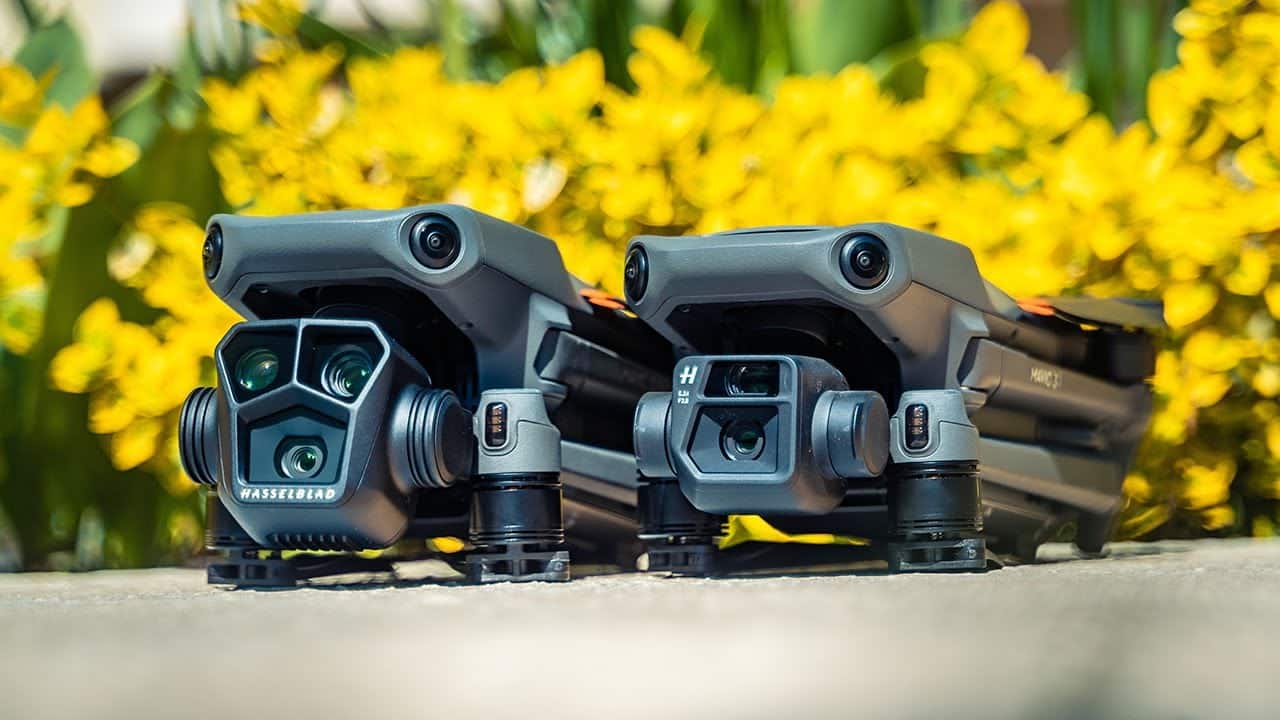
The mandate covers certificate categories spanning drones from 250 grams to 150 kg (331 lbs), the framework Transport Canada established in its 2025 regulatory reform that also opened routine beyond-visual-line-of-sight (BVLOS) operations. Micro drones under 250 grams are entirely outside the Remote ID requirement. This is the category Transport Canada recently confirmed includes the DJI Mini 5 Pro, despite that aircraft's weight tolerance. Existing certificate holders will not need to re-examine; maintaining their certificates through standard recency activity will cover these changes.
Transport Canada acknowledges the cost question. The proposal warns that many consumer drones currently in the field may never receive compliant firmware updates, as manufacturers typically prefer to ship new compliant models rather than update legacy products. A remediation pathway exists, however: aftermarket broadcast modules with independent GPS and power can make older drones legal wherever Remote ID applies, provided the module manufacturer has filed a safety declaration with Transport Canada.
Comments on NPA 2026-005 can be submitted by September 9, 2026, via the Survey Monkey questionnaire or in writing to TC.RPASInfo-InfoSATP.TC@tc.gc.ca with the NPA title in the subject line.
Analysis
From the FAA's Remote ID rulemaking, to the broadcast-module shortage that delayed enforcement until March 2024, to the FRIA approval backlog that buried clubs in paperwork — Transport Canada has clearly studied the American experience.
The network option the FAA abandoned is preserved here; club exemptions are written in from day one rather than patched in under pressure after the fact; legacy hardware gets explicit carve-outs instead of relying on discretionary enforcement memos. The most significant advance is geo-awareness. When DJI removed mandatory geofencing in the U.S., Welsh's defense was that no regulator had ever required it. The European Union Aviation Safety Agency (EASA) already mandates geo-awareness for class-marked drones in Europe, but there is no equivalent federal mandate in the United States. If this proposal survives consultation intact, Canada will leapfrog the U.S. on this front.
Two key dates to watch from here: the comment period closes on September 9, 2026, and the proposal's own timeline targets winter 2027 for Canada Gazette Part I publication. The question the proposal raises but does not answer is how many existing drones will receive manufacturer compliance declarations. Transport Canada itself warns that consumer-grade models may never get compliant firmware. Whether DJI extends Remote ID compliance to the fleet Canadians already own — or reserves it for new models only — will determine the real cost burden of this rule by 2030.
原文來源: 查看原文