Inside the Chula Vista Police Department's Drone as First Responder Program
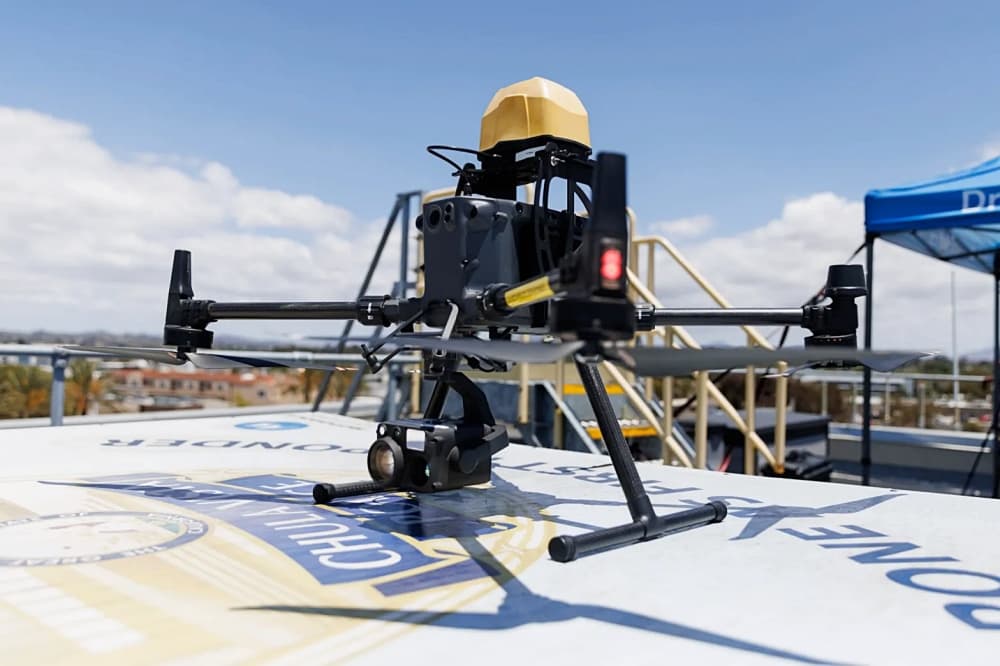
The Chula Vista Police Department (CVPD) in California operates one of the most advanced Drone as First Responder (DFR) programs in the United States. Officers Evan Linney and drone pilot Rusty Johnson monitor a real-time operations room where, within seconds of a 911 call, a drone is automatically dispatched to the scene—often arriving before the first patrol unit.

Highlights
- The Chula Vista Police Department operates one of the most advanced DFR (Drone as First Responder) programs in the United States, with drones dispatched within seconds of a 911 call.
- CVPD holds a BVLOS (Beyond Visual Line of Sight) authorization, allowing drones to fly autonomously across the city without a pilot maintaining direct visual contact.
- The program integrates the 911 dispatch system with a drone deployment platform, automatically assigning the nearest drone based on incident type and location.
- Live aerial footage is streamed in real time to a central operations room, enabling commanders to assess scene conditions and deploy officers more precisely before ground units arrive.
- The CVPD DFR model has drawn nationwide interest and is considered a benchmark framework for police departments across the U.S. looking to adopt drone programs.
Inside the Chula Vista Police Department's Drone as First Responder Program
On the ground floor of the Chula Vista Police Department's (CVPD) downtown headquarters in California, a spacious, dimly lit operations room serves as the nerve center of one of America's most sophisticated law enforcement drone programs. Sergeant Evan Linney and drone pilot Rusty Johnson sit side by side before a wall of monitors displaying live maps, streaming data feeds, and real-time field footage.
When a 911 call comes in, Linney listens closely. Within seconds, the map on screen auto-updates to mark the incident location, and a drone launches, racing toward the scene at top speed—frequently arriving before the first responding officer.
The Drone as First Responder Model
The initiative, known in the industry as DFR (Drone as First Responder), is widely regarded as one of the most comprehensive examples of police drone deployment in the United States. Operating under a Beyond Visual Line of Sight (BVLOS) authorization, CVPD drones can fly autonomously to incident locations across the city without requiring a pilot to maintain direct visual contact.
At the heart of the program is the integration of the 911 dispatch system with the drone deployment platform. Once a call is received, the system automatically analyzes the incident type and location, then assigns the nearest available drone in minimal time. Live footage captured by the drone is streamed directly back to the operations room, allowing commanders to assess the scene before officers arrive on the ground—enabling more informed and precise deployment decisions.
Boosting Law Enforcement Efficiency and Public Safety
According to CVPD data, the DFR program has not only reduced response times but has also helped officers successfully manage cases involving suspect pursuit, search and rescue, and traffic incidents. The aerial perspective allows officers to assess potential risks before approaching a scene, enhancing officer safety in the field.
The model has attracted significant interest from police departments across the United States and is increasingly seen as a key trend in the future of smart law enforcement. Chula Vista's experience now serves as a valuable reference framework for other agencies considering the adoption of drone programs.
This article is compiled and translated based on the original source summary. For the full report, please refer to the original publication.
原文來源: 查看原文
FAQ
Newsletter
Subscribe to our Low-Altitude Industry Newsletter
Daily curated news on low-altitude economy and drone industry, delivered to your inbox.