The U.S. Marine Corps' 'Secret' Carrier Fleet: How Wasp-Class Amphibious Assault Ships Became Light Aircraft Carriers
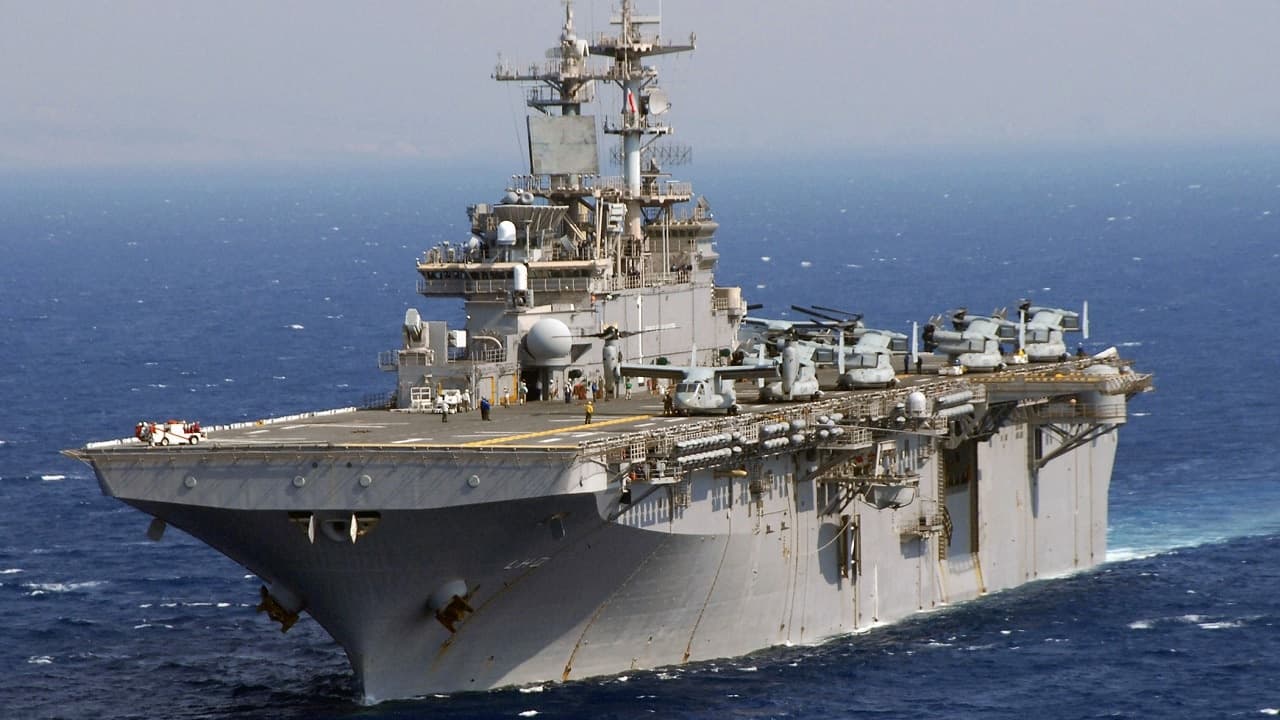
The U.S. Navy's Wasp-class amphibious assault ships can carry up to 20 F-35B stealth fighters in a 'Lightning Carrier' configuration, effectively functioning as light aircraft carriers. This capability allows the Navy to project meaningful air combat power without deploying scarce nuclear-powered supercarriers. As China's anti-ship missile arsenal grows, the strategic value and survivability of these vessels is sparking intense debate.

Highlights
- Wasp-class amphibious assault ships can embark approximately 20 F-35B fighters in a 'Lightning Carrier' configuration, functioning as light aircraft carriers without deploying nuclear-powered supercarriers.
- Each Wasp-class vessel displaces approximately 40,000 tons and can carry up to 1,900 Marines along with helicopters, MV-22 Ospreys, armored vehicles, and a tailored air combat element.
- The U.S. Navy extended the service life of USS Wasp (LHD 1), signaling continued high strategic value for the platform despite growing missile threat concerns.
- The Marine Corps increasingly envisions using Wasp-class ships along the First Island Chain — spanning Japan, Taiwan, the Philippines, and the South China Sea — to seize islands and establish missile outposts against China.
- China's expanding arsenal of anti-ship ballistic missiles (ASBMs), cruise missiles, and long-range bombers has sparked intense debate over whether large amphibious assault ships can survive in a high-end conflict.
The Core Platform of U.S. Expeditionary Warfare
American military power is fundamentally an expeditionary force — one that must travel vast distances to project combat power, deter adversaries, and conduct operations around the world. Within that strategic framework, the U.S. Navy, Air Force, and Marine Corps are typically the most critical elements of any expeditionary campaign.
The Marine Corps has long relied on Wasp-class amphibious assault ships to deliver thousands of Marines — along with their helicopters, vehicles, artillery, and supplies — onto hostile coastlines without depending on local port infrastructure. These vessels sit at the heart of the Amphibious Ready Group (ARG) / Marine Expeditionary Unit (MEU) concept that took shape in the post-Vietnam era, and they remain central to how the United States conducts expeditionary warfare today.
The Tarawa Class: The Original 'Mini Carrier'
The Tarawa-class (LHA) amphibious assault ships entered service in the 1970s and were revolutionary for their time. They consolidated the roles of several different amphibious ship types — helicopter carrier, cargo ship, troop transport, and dock ship — into a single hull. One Tarawa could do it all.
Key Specifications:
- Displacement of approximately 40,000 tons
- Capacity for more than 1,700 Marines
- Large flight deck capable of operating helicopters and Harrier STOVL jets
- Well deck for landing craft and amphibious vehicles
- Able to support battalion-scale amphibious assault operations
The Tarawa class was essentially the godfather of the modern American 'assault carrier' — resembling an aircraft carrier in silhouette, but optimized for Marine missions rather than fleet air defense.
The Wasp Class: A Better Tarawa
The Wasp class is the direct successor to the Tarawa class. The hull forms are broadly similar, but the Navy redesigned the internal architecture around two emerging technologies of the era: the AV-8B Harrier jump jet and the Landing Craft Air Cushion (LCAC). These two improvements dramatically expanded operational flexibility, making the Wasp class the first amphibious assault ship designed from the keel up to support both technologies simultaneously.
Key Improvements:
- Enlarged well deck to accommodate LCACs
- Upgraded aviation facilities
- Enhanced command-and-control spaces
- Improved fixed-wing aircraft operating capability
- Increased Marine Corps shore combat capacity
A single Wasp-class ship can carry 1,900 Marines, helicopters, MV-22 Osprey tiltrotors, armored vehicles, artillery, and a mission-tailored air combat element.
Why It's Called a 'Mini Carrier'
Modern Wasp-class ships can operate a significant number of F-35B Lightning II fifth-generation multirole fighters. When deployed in a 'Lightning Carrier' configuration, a Wasp-class vessel can embark approximately 20 F-35Bs and function as a light aircraft carrier.
This configuration allows the Navy to generate additional air combat power without committing a nuclear-powered supercarrier.
This makes the configuration particularly attractive to Navy planners for several reasons:
- Supercarriers are scarce and extraordinarily expensive
- The Indo-Pacific theater is enormous
- The Marine Corps is increasingly focused on island warfare
- The F-35B can operate from smaller flight decks
In many operational scenarios, a Wasp-class ship carrying 16 to 20 F-35Bs can provide meaningful air combat capability while still embarking Marines and landing aircraft.
How It Would Be Used in Wartime
In a typical operation, a Wasp-class vessel carrying a Marine Expeditionary Unit arrives off a coastline and simultaneously launches multiple platforms: MV-22 Ospreys carrying infantry, CH-53 heavy-lift helicopters, AH-1 attack helicopters, F-35Bs or Harriers, LCACs loaded with vehicles, and amphibious assault vehicles departing from the well deck. The ship itself serves as a floating command post, coordinating the entire operation.
Historically, this concept was designed for Pacific island operations, Middle Eastern coastlines, humanitarian assistance, noncombatant evacuation operations (NEO), and expeditionary raids.
Today, the Marine Corps increasingly envisions using these ships in a conflict with China along the 'First Island Chain' — the arc stretching from the Kamchatka Peninsula through Japan, Taiwan, the Philippines, and the South China Sea. Rather than storming large beaches as in World War II Pacific battles like Iwo Jima, the Marines would instead rapidly seize islands, establish missile outposts, and help control critical maritime chokepoints.
The Strategic Debate: Can They Survive in a Missile-Saturated Environment?
Whether these ships could survive in a missile-saturated threat environment is a serious question. Both the Wasp class and its Tarawa predecessor were conceived in an era when the United States enjoyed uncontested sea and air superiority.
China today fields large numbers of anti-ship ballistic missiles (ASBMs), cruise missiles, long-range bombers, and maritime strike aircraft.
Critics argue that the concept of a 40,000-ton amphibious vessel is dangerously vulnerable to the kind of saturation attacks China would inevitably launch.
Proponents counter that these 'mini carriers' remain indispensable for crisis response — no other platform can integrate aviation combat, command facilities, medical services, troop lift, and amphibious assault capability the way a Wasp-class ship does. Furthermore, the F-35B has transformed these amphibious assault ships into far more potent combat platforms than their original designers ever envisioned.
Strategic Significance
The Wasp class represents a clear bridge between two eras: born for Cold War-era amphibious assault missions, it has evolved into a light aircraft carrier capable of deploying F-35Bs, supporting distributed maritime operations, and serving as a mobile base for Marine littoral combat forces.
The U.S. Navy's recent decision to extend the service life of USS Wasp (LHD 1) signals that military planners continue to place high strategic value on this platform — even as concerns about missile threats continue to grow.
Author: Brandon J. Weichert, Senior Editor for National Security at 19FortyFive.com and author of four national security books. His latest is Destiny Betrayed: How the West Lost Ukraine (Encounter Books).
原文來源: 查看原文
FAQ
Newsletter
Subscribe to our Low-Altitude Industry Newsletter
Daily curated news on low-altitude economy and drone industry, delivered to your inbox.