Strait of Hormuz Evacuation Plan Takes Shape: Hundreds of Stranded Vessels May Be Freed as USVs Join Mine-Clearance Operations
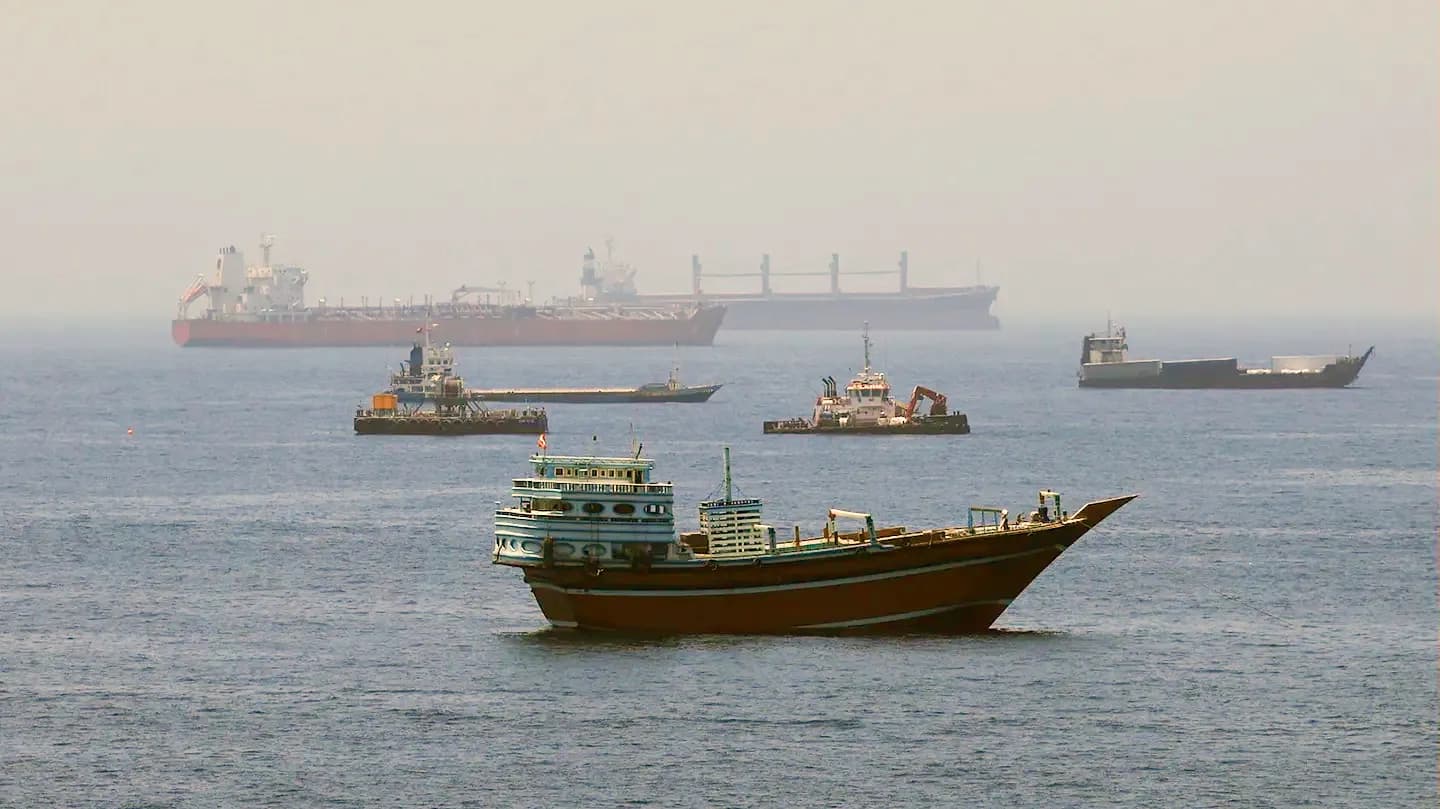
Following the closure of the Strait of Hormuz after a U.S.-Israeli strike on Iran on February 28, hundreds of commercial vessels remain trapped in the Persian Gulf. Oman and the IMO are coordinating two evacuation corridors — a northern route controlled by Iran and a southern route managed by the U.S. The Royal Navy's RFA Lyme Bay, equipped with AI-enabled unmanned surface vessels for mine countermeasures, has transited the Suez Canal. Weekly transits have risen from 32 to 93 ships, though major carriers Maersk and Hapag-Lloyd remain cautious.

Highlights
- 伊朗於2025年2月28日美以攻擊後關閉荷姆茲海峽,數百艘商船至今仍困於波斯灣。
- 阿曼與IMO協調建立南北兩條臨時過境航線,其中南線已確認無水雷,為優先推薦路線。
- 英國皇家海軍輔助艦RFA Lyme Bay於6月19日通過蘇伊士運河,搭載AI賦能USV無人水面載具執行掃雷任務。
- 荷姆茲海峽每週確認過境船隻數從32艘回升至93艘,但馬士基仍有5艘船困在灣內、赫伯羅德拒絕透露滯留數量。
- 布倫特原油價格已從5月初高峰逾114美元/桶回落至每桶74美元以下,但美伊和平協議條款仍存在分歧。
Strait of Hormuz Evacuation Plan Takes Shape: Hundreds of Stranded Vessels May Be Freed as USVs Join Mine-Clearance Operations
Since the United States and Israel struck Iran on February 28 — prompting Tehran to close the Strait of Hormuz — hundreds of commercial vessels have remained stranded in the Persian Gulf. Oman and the United Nations' International Maritime Organization (IMO) are now actively developing evacuation options, even as U.S.-Iran peace negotiations remain fraught and transit volumes gradually recover.
Oman and IMO Coordinate Temporary Maritime Corridors
Oman's Maritime Security Centre announced on Wednesday via X that the Sultanate, acting on its responsibilities over the Strait of Hormuz and its commitment to the global economy, international law, and the law of the sea, had coordinated with the IMO to provide vessels with temporary maritime corridor options. Coordinates have been published by the IMO and Omani authorities, and vessels wishing to transit "must coordinate with the IMO."
The IMO stated that "this large-scale operation will be carried out in close cooperation with Iran, Oman, all coastal states in the region, the United States, and the shipping industry."
In further guidance issued Wednesday, the IMO outlined two transit routes through the Strait of Hormuz: a northern route running close to the Iranian coast, controlled by the Islamic Republic of Iran; and a southern route following the Omani coastline, coordinated by U.S. authorities.
According to the Joint Maritime Information Center, the southern route has been confirmed mine-free and is the recommended priority corridor.
Regardless of which route is chosen, the IMO advised vessels to "maintain their current positions and await further instructions" until "a safe sequencing mechanism is activated to avoid congestion, and risks from mines and navigational conditions are adequately managed." Vessel movement "shall only be undertaken after contact is made through the coordinating mechanism via the IMO, UKMTO, and MICA Centre, and subsequently confirmed by the relevant coastal state."
Mine-Clearance Underway, Details Classified
U.S. Central Command (CENTCOM) declined to provide specifics on the progress of ongoing mine-clearance operations. CENTCOM spokesman Navy Captain Tim Hawkins told this outlet on Wednesday: "For operational security reasons, I'm not able to get into specifics. We've been at it for several weeks and continue to make progress — the fact that commercial vessels are safely transiting and volumes are increasing speaks to that."
Tensions flared again last week when Iran's Islamic Revolutionary Guard Corps (IRGC) claimed the strait had been closed again following an Israeli strike on Lebanon, but CENTCOM maintained the waterway remained open. President Trump posted on Truth Social on Wednesday to deny media reports about the strait's status.
Transit Volumes Recover, but Major Carriers Hold Back
Ship-tracking platform MarineTraffic noted on X Wednesday that "vessel activity in the Strait of Hormuz has surged sharply over two consecutive weekends, signaling a significant shift in transit patterns at one of the world's most critical maritime chokepoints. Confirmed transits rose from 32 vessels over June 12–14 to 93 vessels over June 19–21, an increase of 61 ships week-over-week," citing data from MarineTraffic and Kpler.
The sharpest single-day jump came on Saturday, when transits leapt from 3 to 42 vessels compared with the prior week.
On the energy side, Kpler data show that at least 20 tankers carrying approximately 35 million barrels of crude oil have departed the Persian Gulf through the Strait of Hormuz since the U.S. and Iran agreed to reopen the lane.
Nevertheless, two major shipping companies contacted by this outlet remain cautious:
- Maersk described the announcement of the U.S.-Iran Memorandum of Understanding (MoU) as "a welcome and positive development, but public information remains limited and it is too early to assess the impact on logistics and maritime operations." The company confirmed it still has five vessels trapped in the Persian Gulf and has not changed its operational approach in the region.
- Hapag-Lloyd said its "vessels are on standby, but will only transit the Strait of Hormuz once safety is confirmed," declining to disclose how many of its ships remain inside the Gulf.
Royal Navy Deploys USVs for Mine Countermeasures; German Vessels Accompany
Meanwhile, the Royal Fleet Auxiliary vessel RFA Lyme Bay, along with two German Navy warships, has transited the Red Sea and stands ready to assist in clearing mines from the Strait of Hormuz if required. The Lyme Bay "has been configured as a forward afloat support base for mine countermeasures, transited the Suez Canal on June 19, and proceeded south through the Red Sea."
The vessel carries unmanned surface vessels (USVs) equipped with towed sonar arrays and AI-powered automatic target recognition technology, which can "filter and refine large volumes of data to help operators accelerate the process of classifying and neutralizing mines." It is also equipped with VideoRay Defender-Viper portable mine disposal vehicles, capable of locating, identifying, and destroying mines. Mine warfare, diving, and explosive ordnance disposal specialists are embarked to support the mission.
RFA Lyme Bay is accompanied by the German Navy command support ship FGS Mosel and minehunter FGS Fulda, though the two German vessels "separated from the task group on June 23 to proceed to Djibouti for resupply and further readiness preparations." They currently operate under the EU's Operation Aspides, focused on defending commercial shipping in the Red Sea against Houthi attacks.
Oil Prices Fall, but Outlook Remains Uncertain
As Hormuz transit volumes recover, oil prices have dropped sharply. As of Wednesday morning, Brent crude was trading just below $74 per barrel, well below the peak of over $114 per barrel seen in early May at the height of U.S.-Iran tensions.
However, the two sides remain divided on the terms of a final peace agreement — including whether Iran will agree to allow IAEA inspections of its nuclear facilities — with conflicting accounts from various parties. With the global economy just beginning to recover from the shock of elevated oil prices and U.S. Republicans facing pressure ahead of November's midterm elections, the Trump administration is under significant political pressure not to resume hostilities.
Clearing the backlog of stranded vessels from the Persian Gulf remains the immediate priority — but when robust two-way transit will fully resume remains an open question, and one that is critical to stabilizing the global economy and the broader geopolitical situation.
Source: The War Zone (TWZ) | Contact the author: howard@twz.com
原文來源: 查看原文
FAQ
Newsletter
Subscribe to our Low-Altitude Industry Newsletter
Daily curated news on low-altitude economy and drone industry, delivered to your inbox.