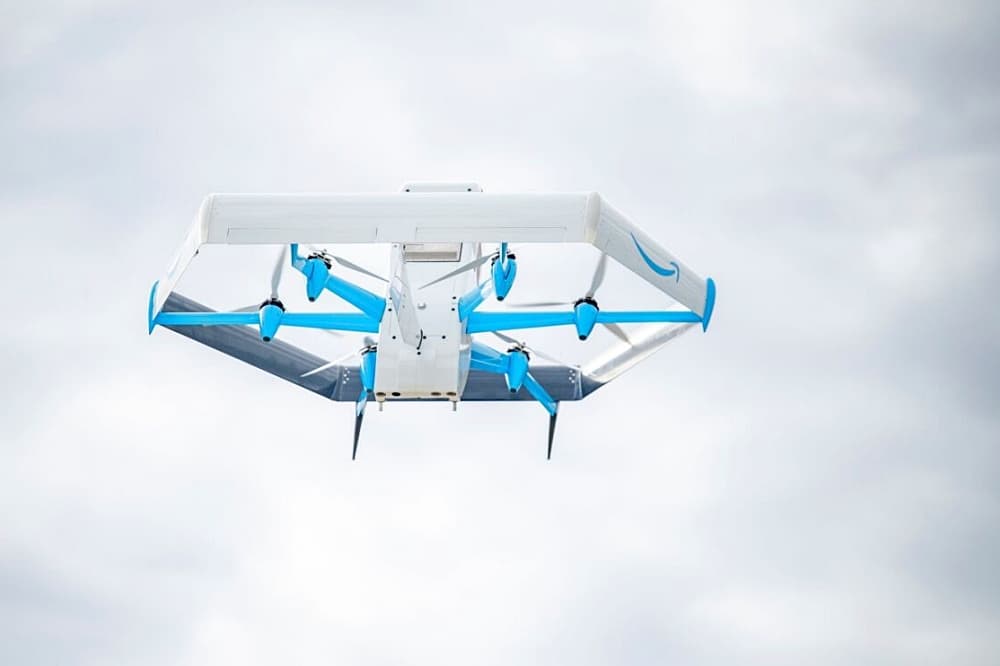
'Like a Flying Leaf Blower' — Amazon Delivery Drones Draw Fierce Backlash Over Noise and Low Altitude in Michigan Suburb
Residents of Hazel Park, a Detroit suburb in Oakland County, Michigan, are pushing back hard against Amazon's Prime Air delivery drone operations. Complaints center on excessive noise likened to a 'flying leaf blower,' dangerously low flight altitudes, and near-constant overhead traffic that locals say has turned their neighborhood into an Amazon drone corridor.

Highlights
- Residents of Hazel Park, Michigan describe Amazon Prime Air drones as sounding 'like a flying leaf blower,' with near-continuous flights over rooftops throughout the day.
- Key complaints include excessive noise, low flight altitudes, high operational frequency, and privacy concerns from low-altitude overflights in a residential area.
- Amazon states that Prime Air operations at its Hazel Park site comply fully with FAA regulations.
- Local residents have escalated complaints to municipal authorities, calling for stricter rules on drone altitude, noise, and flight frequency.
- The dispute underscores a growing industry-wide challenge: balancing the commercial benefits of drone delivery against the quality of life of residents living beneath new aerial routes.
Residents Describe Life Under a 'Drone Corridor'
Residents of Hazel Park, a Detroit suburb in Oakland County, Michigan, are voicing sharp opposition to Amazon's increasingly frequent Prime Air delivery drone operations. Complaints range from excessive noise and low flight altitudes to drones constantly passing directly over homes — disrupting daily life in what many locals describe as a de facto aerial highway carved through their neighborhood.
Joshua Brent, who lives near an Amazon fulfillment center, said the drones sound "like a flying leaf blower" and pass over his rooftop almost continuously throughout the day. He and his neighbors say they feel as though their community has been repurposed as Amazon's private air corridor — without their consent.
Residents' Key Grievances
Locals have raised several specific complaints against the Prime Air operations:
- Noise pollution: The drones emit a persistent, high-pitched sound that residents compare to a flying leaf blower, significantly degrading quality of life at home.
- Excessively low flight altitude: Residents say the drones fly far too low, creating a sense of both physical danger and intrusion.
- High flight frequency: Drones operate nearly around the clock, appearing over residential areas throughout the day.
- Privacy concerns: Low-altitude overflights have raised fears among residents that their privacy is being compromised.
Context: Amazon Prime Air's Rapid Expansion
Amazon's Prime Air drone delivery service has been expanding steadily in recent years, with Hazel Park serving as one of its key pilot sites. Amazon maintains that its drone delivery system complies with all applicable Federal Aviation Administration (FAA) regulations and that the company is committed to minimizing impact on surrounding communities.
However, as the scale of drone delivery operations continues to grow, friction between residential communities and logistics operators is becoming increasingly pronounced. The dispute highlights an unresolved tension at the heart of commercial drone delivery's rapid rollout: how to balance business efficiency against the quality of life of residents living beneath these new aerial routes.
What Happens Next
Local residents have begun filing complaints with municipal authorities and relevant agencies, calling for stricter rules governing drone flight altitude, noise standards, and operational frequency. The case has sparked broader debate about whether the current regulatory framework for drones adequately protects the rights and wellbeing of people living in residential areas.
原文來源: 查看原文
FAQ
Newsletter
Subscribe to our Low-Altitude Industry Newsletter
Daily curated news on low-altitude economy and drone industry, delivered to your inbox.