Hands-On at Beta Technologies Media Day: Flying the All-Electric Alia CX300
Beta Technologies hosted its first media day at its Burlington, Vermont headquarters, opening its R&D and manufacturing facilities to press and offering flights aboard the all-electric Alia CX300. CEO Kyle Clark confirmed the CX300 is on track for type certification next year, the VTOL Alia A250 by 2028, and that pre-certification commercial operations could begin in at least 10 U.S. states as early as September.

Highlights
- Beta Technologies 的 Alia CX300 全電動飛機採用線傳飛控,操控直觀到可讓零飛行經驗者短暫接管操控。
- CX300 與 VTOL 版 A250 共用約 80% 零組件,FAA 將把 CX300 認證工作的約 80% 折抵用於 A250 認證程序。
- CX300 預計明年取得型式認證,A250 VTOL 版本則預計於 2028 年完成認證。
- Beta Technologies 計畫最快 2025 年 9 月在至少 10 個美國州份以預認證機型展開商業運營,初期涵蓋貨運與醫療物資配送。
- Beta 測試機隊累計飛行里程已逾 14 萬海里,旗下充電系統已部署於全美逾 60 座機場。
Hands-On at Beta Technologies Media Day: Flying the All-Electric Alia CX300
Reporting by FLYING editors
FLYING's editorial team includes more than a few active and retired pilots. This time, however, the person in the left seat had zero flight experience.
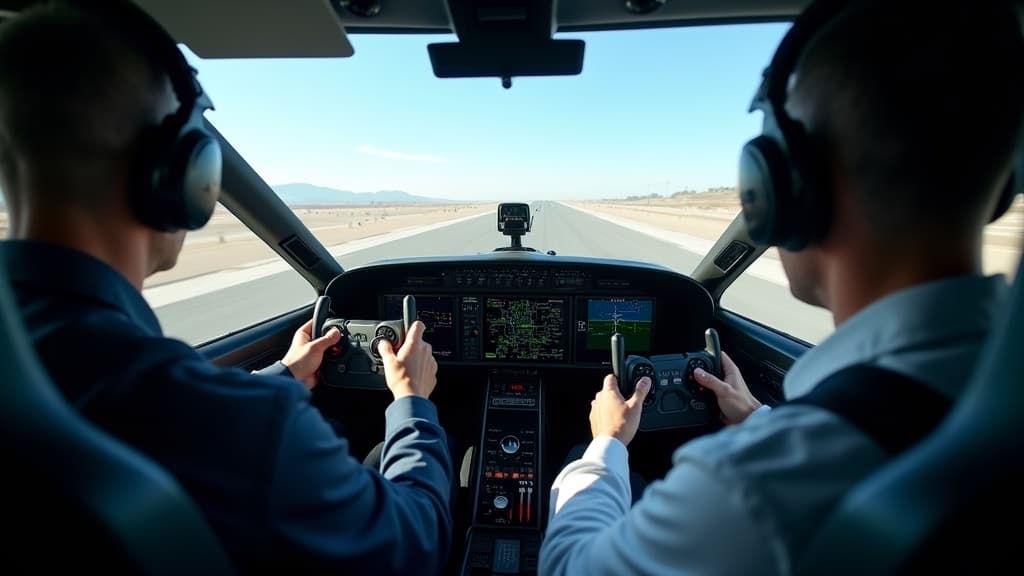
On June 3, this reporter climbed into the cockpit of the Beta Technologies Alia CX300, an all-electric aircraft equipped with fly-by-wire controls so intuitive that test pilot Chris "Pooter" Caputo handed over the controls for several minutes — and the aircraft did not end up in Lake Champlain, which sits just beside Beta's Burlington campus.
The impromptu handover happened because the reporter was seated to Caputo's left, adjacent to one of the CX300's two sets of four-axis sidesticks. The Alia is one of the few electric aircraft on the market fitted with dual pilot control systems, making it suitable for flight training.
Media Day Overview
Beta Technologies' inaugural media day included tours of its research, development, and production facilities, culminating in a formation flyby by multiple aircraft. In addition to the conventional takeoff-and-landing (CTOL) CX300, Beta's fleet includes the vertical takeoff and landing (VTOL) Alia A250 and the hybrid-electric MV250 designed for defense applications. All three variants can be configured for either passenger or cargo operations.
When Will the Alia Enter Service?
Beta Technologies is one of the most prominent developers in the advanced air mobility (AAM) sector.
The CX300 has already completed test flights across the continental United States and Europe under day, night, VFR, and IFR conditions. Last year, it flew into Hartsfield-Jackson Atlanta International Airport (KATL) — the world's busiest — and served as the opening demonstration flight at the Paris Air Show.
As of June, Beta's test fleet had logged more than 140,000 nautical miles. That same month, the CX300 began demonstration flights in Hawaii, with an appearance at the Farnborough International Airshow planned for July.
Despite this track record, CEO Kyle Clark believes media coverage has underestimated the company's progress. He said one goal of the media day was to demonstrate that Beta's VTOL program is as mature as those of competitors such as Joby Aviation and Archer Aviation.
Clark told FLYING that Beta would release specific VTOL flight-test data, though that data had not been published by press time.
Company officials noted, however, that the CX300 and A250 share a large number of components — including Beta's H500A pusher electric motor, battery packs, flight control computers, and a Hartzell Part 35 propeller. As a result, once the CX300 is certified, the FAA will apply approximately 80% of that certification work toward the A250's certification process.
Clark said he is "highly confident" the H500A will achieve Part 33 certification before the end of the year. He expects the CX300 to receive its type certificate roughly one year after the H500A is certified, with the A250 following approximately one year later — placing VTOL certification in 2028.
Two Aircraft, One Core Design
Chief Operating Officer Sean Donovan led a media tour of the "South 40" manufacturing and assembly facility — a 188,000-square-foot building where the company plans to eventually produce hundreds of aircraft per year.
The factory floor displayed several active and retired Alia prototypes (identifiable by their four-wheel landing gear) alongside at least three production-intent airframes at various stages of assembly and testing. The CX300 and A250 are assembled side by side on the same production line; the only physical difference is that the A250 requires the addition of VTOL lift booms and motors.
"Structurally, that's the only difference between these two aircraft," Donovan said. "Everything else uses the same tooling, the same processes, the same procedures as a conventional aircraft — and that's pretty remarkable."
The Alia's design was inspired by the Arctic tern, a migratory bird that makes the longest annual migration of any animal on Earth, flying more than 1 million miles over its lifetime. The Alia's 50-foot wingspan and 36-foot fuselage replicate the seabird's proportionally wide wing relative to its body.
"It sustains its entire migration on very little food," said Adam Lowe, head of flight operations. "We face an inherent energy density limitation with batteries and need to fly further — learning from that bird is where the Alia's shape came from."
Clark said Beta deliberately avoided complex systems such as thrust-vectoring control or in-flight liquid cooling to reduce maintenance costs and accelerate commercialization. Internal estimates indicate the CX300 can reduce per-flight-hour operating costs by 40% compared with an equivalent turbine aircraft — factoring in pilot, insurance, and battery degradation costs. CFO Herman Cueto estimates the A250 will be 75% cheaper to operate than a helicopter. Pricing for both models has not yet been announced.
Beta also manufactures its own battery packs at the South 40 facility. Nate Ward, head of North American charging networks, noted that the company's aircraft-agnostic charging system is now installed at more than 60 airports across the United States, and that the CX300 and A250 share the same battery pack format.
Test Flight: An Aircraft Built for Beginners
Before the media day flight segment, Beta walked attendees through its pilot training program.
Members of the simulation training team explained that test pilots and employees — all of whom receive free flight training on the Alia and other aircraft types — use the same simulator for both models. The only difference in the VTOL cockpit configuration is two additional switches to activate the four vertical lift motors.
The Alia's control interface consists of a four-axis sidestick, fly-by-wire flight controls, and a thumb-wheel on the center console for speed adjustment. The avionics suite is built around the Garmin G3000 Prime touchscreen system, displaying altitude, battery state, and other critical data, and allowing pilots to set new headings with ease. Notably, the display shows available energy in kilowatt-hours (kWh) and real-time power consumption, giving pilots a clear read on remaining range.
This reporter experienced the control system firsthand during the CX300 demo flight. Burlington airport controllers were clearly familiar with the Alia — clearance for Caputo's departure came quickly, and the aircraft accelerated down Runway 33 and climbed away smoothly.
Caputo demonstrated banked turns of approximately 30 degrees left and right, then cut power to let the aircraft glide on its wings before resuming thrust. Then came the surprise:
"You have the controls."
Despite only a handful of simulator sessions beforehand, this reporter adapted quickly to the Alia's remarkably simple handling characteristics. The approach and landing were, naturally, returned to Caputo — but the brief experience made one point clearly: the Alia is mature enough to serve as a training platform, comparable to the Pipistrel Velis Electro that has already entered flight schools across the United States.
Commercialization Roadmap
Later in the day, the passenger CX300, an optionally piloted cargo variant, and the A250 completed a formation flyby. This reporter witnessed the A250 transition from cruise flight to a VTOL hover in gusty conditions — and the aircraft's low acoustic signature was readily apparent, even if Beta's claim of being 10 times quieter than a helicopter remains to be independently verified.
Pilots from Republic Airways have also flown the Alia. Beta and Republic recently completed two rounds of testing — one in sub-freezing temperatures in the northeastern United States and one in the Florida heat. According to Kristen Costello, head of government and regulatory affairs, pilots reported a 100% dispatch reliability rate.
"The sample size isn't large enough to draw definitive conclusions, but it's a very encouraging sign," Clark said.
Beta's target is CX300 certification next year and A250 certification in 2028. Readers may see the aircraft in revenue service even sooner: Clark expects that as early as September, Beta plans to begin actual commercial operations with pre-certification aircraft in at least 10 U.S. states.
The FAA has selected Beta for seven projects under its eVTOL Integration Pilot Program (eIPP), a program lasting at least three years that allows new entrants to conduct flights at airports across the country. Clark said the eIPP "allows us to begin serving customers like Republic Airways under Part 135," covering cargo, medical supply transport, and potentially fare-paying passengers.
"Cargo and logistics first, then passengers," Clark said. "Conventional takeoff-and-landing cargo — we're ready for that today. Then CTOL passengers, then VTOL cargo, then VTOL passengers."
Originally published in FLYING. Translated and edited for this publication.
原文來源: 查看原文
FAQ
Newsletter
Subscribe to our Low-Altitude Industry Newsletter
Daily curated news on low-altitude economy and drone industry, delivered to your inbox.