F-15E Shootdown: Pilot Describes 'Jellyfish-Like' Drone Formation, Spotlight Falls on Iran's Product 358
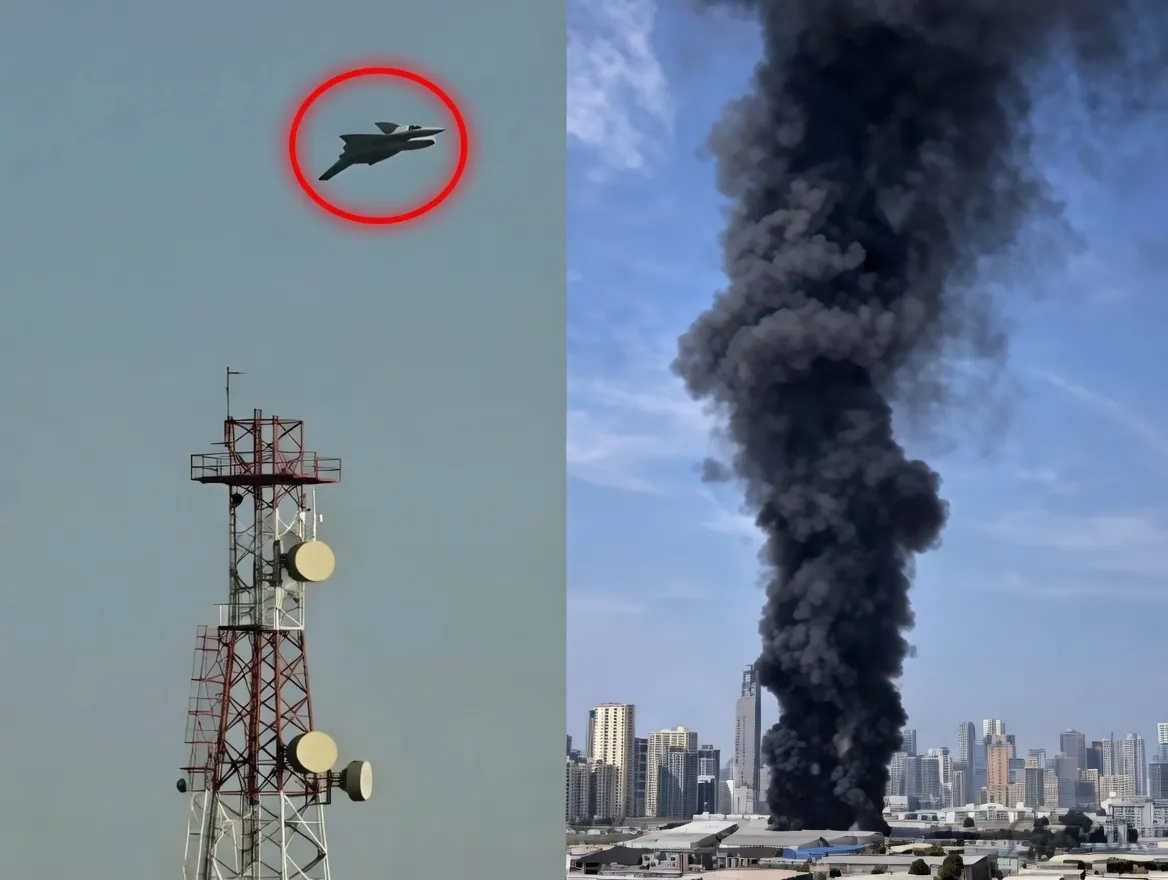
A U.S. Air Force F-15E was shot down over Iran on April 3, 2026. Before ejecting, the pilot reported seeing multiple Iranian drones moving in a coordinated 'jellyfish-like' formation. The account has sparked intense debate in U.S. intelligence circles over whether Iran has achieved advanced drone swarm capability or deployed its 'Product 358' loitering munition system in a new tactical role.

Highlights
- A U.S. F-15E was shot down over Iran on April 3, 2026, marking the first U.S. combat aircraft lost to hostile fire in over 20 years since a 2003 A-10 shootdown over Baghdad.
- The F-15E pilot reported seeing multiple Iranian drones moving in a synchronized 'jellyfish-like' formation before ejecting, prompting intense debate in U.S. intelligence circles.
- Analysts have identified three leading explanations: advanced Iranian drone swarm/mesh-network capability, a pre-positioned drone barrier along known U.S. flight paths, or concurrent Israeli drone operations.
- Iran's Product 358 loitering munition — an autonomous patrol-and-intercept system — is under heightened scrutiny as a possible tool used to track and engage U.S. stealth aircraft.
- Western intelligence has repeatedly underestimated Iranian capabilities; Iran struck Diego Garcia (4,000+ km away) and publicly released footage of tracking U.S. F-35 stealth fighters.
F-15E Shootdown: Pilot Describes 'Jellyfish-Like' Drone Formation, Spotlight Falls on Iran's Product 358
For months, U.S. aviation experts and intelligence officials have been debating a critical question: how did Iran successfully detect and strike a U.S. F-35 Lightning II stealth fighter — the first time the aircraft had been hit in combat in nearly a decade of operational history?
Although that F-35 ultimately landed safely at a friendly base in the Persian Gulf region and its pilot was unharmed, the incident sent shockwaves through the U.S. military and intelligence community, shattering the long-held assumption that stealth aircraft are nearly impossible to detect by adversary radar.
However, a firsthand account from the pilot of an F-15E shot down over Iran on April 3 has, at least for now, shifted attention away from the F-35 incident.
Pilot Reports 'Jellyfish' Formation
According to CNN, four sources familiar with the matter revealed that the F-15E pilot witnessed a startling scene before ejecting: multiple Iranian drones hovering in the air and moving in unison in a 'jellyfish-like' formation.
During the post-mission intelligence debrief, the pilot told officials he observed several drones suspended in the air, moving in synchrony and forming a pattern he likened to a jellyfish. The description triggered heated debate within the U.S. intelligence community.
If accurate, the account would represent a significant leap in Iranian drone technology. Iran had previously garnered widespread attention for developing cheap, one-way kamikaze drones.
Iran's mass-produced, low-cost, expendable Shahed drones have already been widely replicated — first by Russia, which fields them under the name Geran, and more recently by the United States, which developed a version directly inspired by reverse-engineered Shahed designs, called LUCAS (Low-Cost Unmanned Combat Aerial System). LUCAS has been deployed extensively in recent conflicts to strike Iranian targets.
One source told CNN: "Multiple drones were connected to each other, moving as one, with smaller drones hanging below the larger ones like legs. It was like something from outer space." Another source said the pilot described flying into an airborne 'drone minefield.'
Possible Causes of the F-15E Shootdown
The precise cause of the F-15E's destruction remains under investigation. Preliminary reports suggest the drone formation may have played some role in enabling Iran to bring down the aircraft. Notably, this was the first time a U.S. combat aircraft had been downed by hostile fire in more than two decades — the last occasion was in 2003, when an A-10 Thunderbolt II (Warthog) was struck by an Iraqi surface-to-air missile over Baghdad.
Three Possible Explanations for the 'Jellyfish' Formation
1. Drone Swarm Capability
Sources suggest the pilot's description may indicate that Iran has developed what is known as 'one-to-many mesh networking' or 'swarm capability.' Mesh networking allows an operator to simultaneously command multiple interconnected drones that communicate not only with the operator but with one another via datalinks, and can act autonomously to dynamically adjust formation in response to battlefield conditions.
Prior to this pilot's report, no credible open-source information indicated Iran had deployed advanced mesh-networked drone swarms. Iran's drone program has to date focused primarily on mass-producing low-cost one-way attack drones and employing saturation tactics combining drones with ballistic and cruise missiles. If Iran has indeed achieved mesh-networking capability, it would represent a qualitative leap — from 'mass simultaneous launch of cheap drones' to 'coordinated, resilient, semi-autonomous swarms.'
2. Drone Barrier Tactics
A second possibility is that Iran deployed a 'drone barrier' along known U.S. flight paths — releasing multiple loitering munitions in close proximity to one another. U.S. aircraft, seeking to evade Iranian air defenses, often penetrate at low altitude. Once Iran identifies these low-altitude ingress corridors, it can seed them with dozens of loitering munitions. A pilot flying at high speed through such a corridor would encounter the barrier within seconds, and the visual impression could be indistinguishable from a drone swarm.
This tactic — sometimes called 'barrage drone' deployment — is used to protect high-value facilities from aerial threats. If Iran had pre-positioned multiple Product 358 loitering munitions in a specific zone, the effect on the F-15 pilot's perception would likely be the same.
3. Israeli Drone Operations
A third possibility is that the drones the pilot observed were not Iranian but Israeli, conducting concurrent missions to conduct reconnaissance over Iranian territory and suppress air defenses.
Product 358: Iran's 'Drone Air Defense' System
Analysts believe Iran may have used its hybrid loitering munition and surface-to-air system — the Product 358, sometimes described as a 'drone air defense' system — to track and engage the F-35. After launch, the system can autonomously patrol and loiter over a designated airspace, search for targets, and dive to intercept once a target is acquired.
Iran's Technology Has Repeatedly Surprised Western Intelligence
Several incidents illustrate how Western intelligence agencies have consistently underestimated the true progress of Iran's drone and missile programs:
- Before the conflict, Western assessments placed the maximum range of Iran's longest-range ballistic missiles at approximately 2,000 km. During the war, however, Iran successfully struck the joint UK-U.S. base at Diego Garcia in the Indian Ocean — more than 4,000 km from Iranian territory.
- Iran has fielded hypersonic missiles capable of traveling at extraordinary speeds and executing sharp terminal-phase maneuvers, making them nearly impossible to intercept; they have struck targets inside Israel on multiple occasions.
- Iran has extensively used drones and missiles to deliver cheap cluster munitions, causing widespread damage to airfields, radar stations, and ground infrastructure.
- The Islamic Revolutionary Guard Corps (IRGC) has publicly released footage purporting to show tracking and targeting of U.S. F-35 stealth aircraft.
Questions Remain About the Account's Reliability
It is worth noting that CNN's reporting does not draw on direct testimony from the pilot himself, but rather from sources describing what the pilot said. In high-pressure, rapidly evolving combat environments, fighter pilots can experience visual illusions due to the 'fog of war.'
Furthermore, this was the second time the pilot had been shot down during the Iran conflict — earlier in the war, he had ejected following a friendly-fire incident involving Kuwaiti forces. Being shot down and ejecting twice within less than a month may have affected his recall of the rapidly unfolding sequence of events.
Indeed, the intelligence officers conducting the debrief reportedly asked: "Are you sure that what you saw was what you're describing?"
Fighter pilots have a long history of reporting unusual aerial phenomena. During World War II, both Allied and Axis aircrew reported 'Foo fighters' — mysterious luminous aerial phenomena appearing as rapidly moving glowing spheres or orbs that seemed to follow aircraft in formation and execute maneuvers pilots described as 'intelligent' or 'evasive.' To this day, no definitive explanation has been established.
Conclusion
For now, what can be said with certainty is that this F-15E pilot's testimony will continue to fuel intense debate across the aviation and intelligence communities, and that many details surrounding how Iran successfully shot down the F-15 remain to be clarified.
Author Sumit Ahlawat has more than ten years of experience in the news media industry, with previous roles at Press Trust of India (PTI), Times Now, Zee News, Economic Times, and Microsoft News. He holds an MA in International Media and Modern History from the University of Sheffield, UK.
Originally published in the EURASIAN TIMES.
原文來源: 查看原文
FAQ
Newsletter
Subscribe to our Low-Altitude Industry Newsletter
Daily curated news on low-altitude economy and drone industry, delivered to your inbox.