The F-35 Never Surpassed the F-22 Raptor — Because It Was Never Meant To
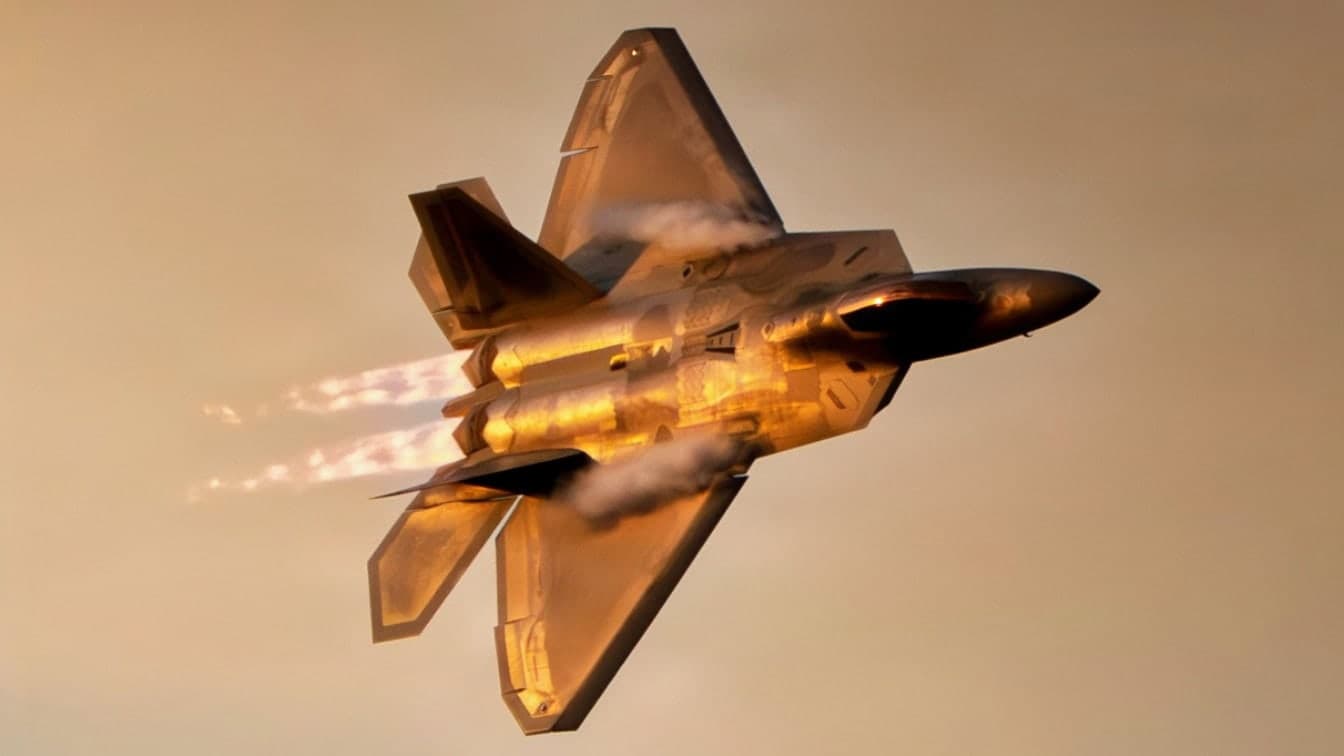
Despite claims that the F-35 Lightning II has surpassed the F-22 Raptor in sensor fusion and information warfare, analysts argue the Raptor remains unmatched in beyond-visual-range (BVR) air combat — the mission that matters most. The fact that Congress refuses to sell the F-22 to allies while freely sharing the F-35 speaks volumes about which aircraft holds true top-tier status.

Highlights
- The F-22 Raptor was purpose-built for beyond-visual-range (BVR) air combat and, according to retired Marine pilot Dave Berke, remains unmatched in pure flying performance.
- The F-35's 'fully mission capable' rate has fallen to just 25 percent, according to the latest GAO assessment — far below Pentagon targets.
- Congress has refused to authorize F-22 exports to any ally for over 20 years, citing classified onboard technologies, while freely approving F-35 sales abroad.
- Lockheed Martin has proposed a 'fifth-generation-plus' F-35 upgrade package incorporating NGAD-derived technologies to boost stealth, EW, and autonomous teaming capabilities.
- The U.S. Air Force is upgrading the F-22 with a new infrared detection system (IRDS), low-observable external fuel tanks, and manned-unmanned teaming (MUM-T) capabilities to extend its relevance in the Indo-Pacific.
The F-35 Never Surpassed the F-22 Raptor — Because It Was Never Meant To
For years, the prevailing consensus has held that Lockheed Martin's fifth-generation air superiority stealth fighter, the F-22 Raptor, outperforms the company's own fifth-generation multirole fighter, the F-35 Lightning II. Yet after the Obama administration abruptly terminated F-22 production in 2009 on budgetary grounds, the F-35 gradually became the primary fifth-generation fighter in U.S. service.
Unlike the F-22, which serves exclusively with the U.S. Air Force, the F-35 equips all three U.S. military aviation branches — the Air Force, Navy, and Marine Corps — and is also an export platform, now operated by numerous American allies.
Has the F-35 Really Surpassed the F-22?
Recent commentary has argued that, after years of development, the F-35 has overtaken the F-22. The central claim is that the F-22 is a pure air superiority dogfighter, whereas the F-35 has evolved into an information warfare platform.
When the F-35 first entered service, critics focused on what it was not: it was slower and less maneuverable than the F-22, carried fewer air-to-air missiles in its internal bays, and had only a single engine rather than the Raptor's twin high-thrust powerplants. The program was also plagued by severe cost overruns.
Proponents, however, emphasize the F-35's unrivaled sensor fusion — integrating passive electronic intelligence gathering, an active electronically scanned array (AESA) radar, a distributed aperture infrared sensor system, secure data links, advanced electronic warfare (EW) capabilities, and the ability to provide targeting data for other aircraft, ships, and missile batteries.
In short: if the F-22 is a close-range brawler, the F-35 is a long-range sensor node.
Continuous Upgrades Have Shifted the F-35's Standing
Another reason many analysts believe the F-35 has pulled ahead is the pace of its upgrades. Successive software and hardware blocks have enhanced processor performance, radar capability, and other dimensions of the aircraft. AI-assisted battle management functions have now been integrated as well.
Lockheed has also proposed a "fifth-generation-plus" upgrade package, incorporating technologies developed during its bid for the U.S. Air Force's Next Generation Air Dominance (NGAD) competition. The package is expected to further improve stealth, electronic warfare performance, and autonomous collaborative combat capabilities.
Advocates Are Overstating the F-35's Advantages
Nevertheless, the F-35 has a poor mission-capable record — fleet-wide availability has never exceeded 50 percent. A U.S. Government Accountability Office (GAO) report for fiscal year 2021 found that 67 percent of the F-35 fleet met the "mission capable" standard, but only 38 percent achieved "fully mission capable" status.
The situation has not improved. The GAO's most recent assessment found "mission capable" rates had fallen further to 44 percent, with "fully mission capable" dropping to just 25 percent — well short of Pentagon targets for a program now more than two decades old.
Meanwhile, the F-22 has not stood still. Modernization efforts include a new infrared detection system (IRDS), upgraded electronic warfare capabilities, and an open mission systems architecture to streamline future software updates. The Air Force has also equipped the Raptor with low-observable external fuel tanks that significantly extend its combat radius — a critical advantage in the vast Indo-Pacific theater in any potential conflict with China. Testing of F-22 manned-unmanned teaming (MUM-T) capabilities has also begun.
The F-22 Still Dominates the Most Critical Mission
In modern air combat, beyond-visual-range (BVR) engagements are increasingly decisive. In a potential conflict with China, aircraft must survive and operate within a contested environment shaped by long-range radars, electronic warfare, satellite surveillance, drone swarms, integrated air defense systems, and long-range missiles. The side that detects and shoots first typically wins.
The F-22 was purpose-built for BVR combat, and on that core mission it remains without peer. Retired Marine Corps fighter pilot Dave Berke, speaking to Business Insider, stated plainly that the Raptor "is still unmatched in pure flying performance."
Perhaps the most telling indicator is this: Congress has refused to authorize the sale or transfer of the F-22 to any ally, on the grounds that — despite more than 20 years of service — the aircraft still contains advanced technologies and classified capabilities that Washington is unwilling to share. Congress has expressed no such reservations about the F-35.
That reality, quietly but clearly, answers the question of which aircraft is truly superior.
Author: Brandon J. Weichert, Senior National Security Editor at 19FortyFive.com, and author of four national security books. His latest work is A Disaster of Our Own Making: How the West Lost Ukraine (Encounter Books).
原文來源: 查看原文
FAQ
Newsletter
Subscribe to our Low-Altitude Industry Newsletter
Daily curated news on low-altitude economy and drone industry, delivered to your inbox.