JetBlue Flight 948 Crew Reports Drone Strike at 3,000 Feet on JFK Approach — No Damage or Debris Found
On June 29, at approximately 7:15 a.m. ET, the crew of JetBlue Flight 948 reported striking a drone at roughly 3,000 feet while on final approach to JFK aboard an Airbus A321. The aircraft landed safely six minutes later. Post-flight inspection found no damage and no physical evidence of a collision. The FAA confirmed it will investigate, while noting all information remains preliminary. Analysts urge caution before treating the pilot report as a confirmed strike.

Highlights
- JetBlue Flight 948's Airbus A321 crew reported a drone strike at approximately 3,000 feet on final approach to JFK at 7:15 a.m. ET on June 29, 2025.
- Post-flight inspection found zero damage and no physical evidence of any collision, according to both JetBlue and the FAA.
- The FAA confirmed it will investigate but explicitly labelled all information as preliminary and subject to change.
- The incident is the third reported drone encounter near New York or New Jersey airports in four days, following two separate reports near Newark Liberty on June 26.
- FAA regulations cap drone flight at 400 feet AGL; a drone at the reported 3,000-foot altitude over the New Jersey coast would be operating at roughly seven times the legal ceiling with no lawful basis.
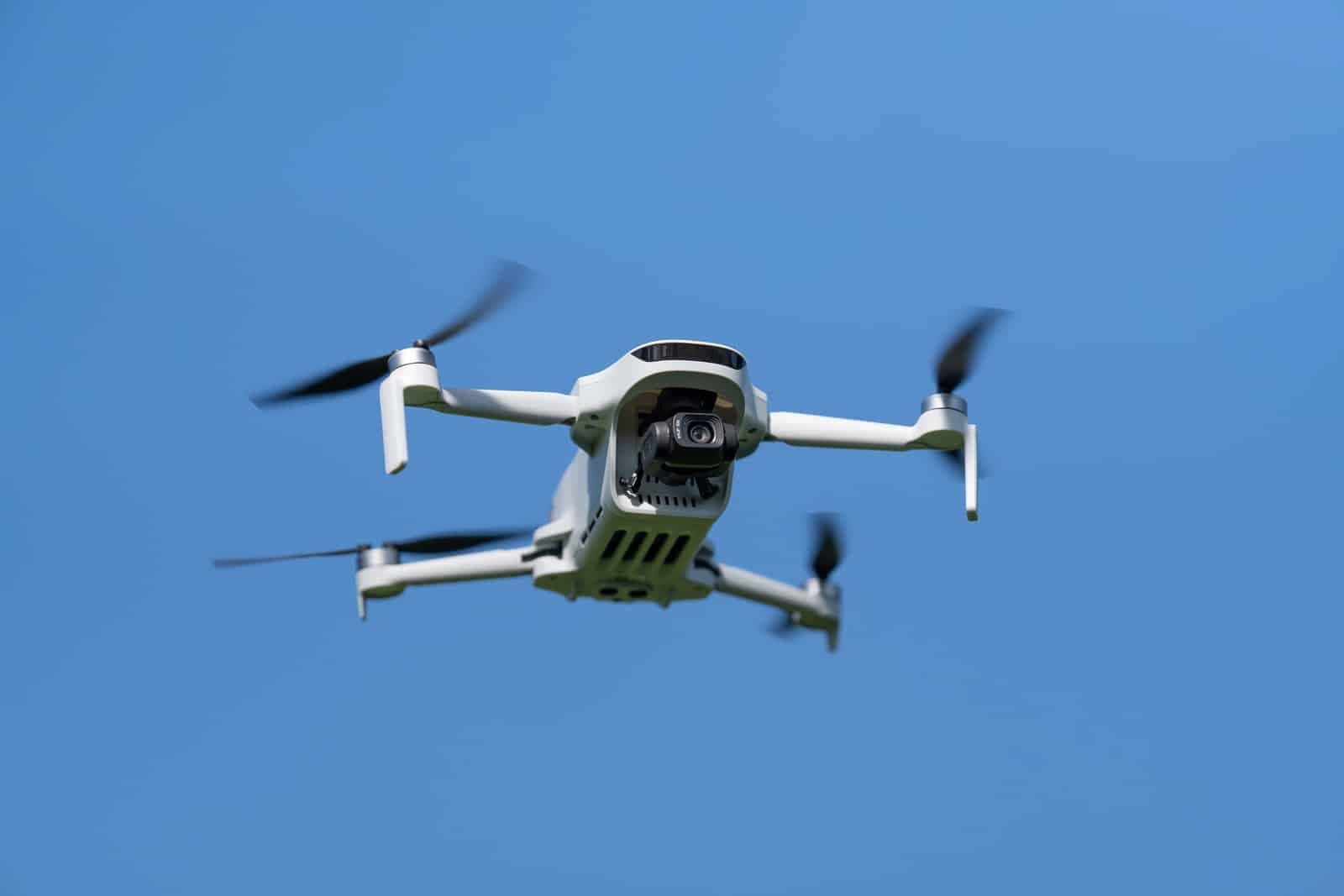
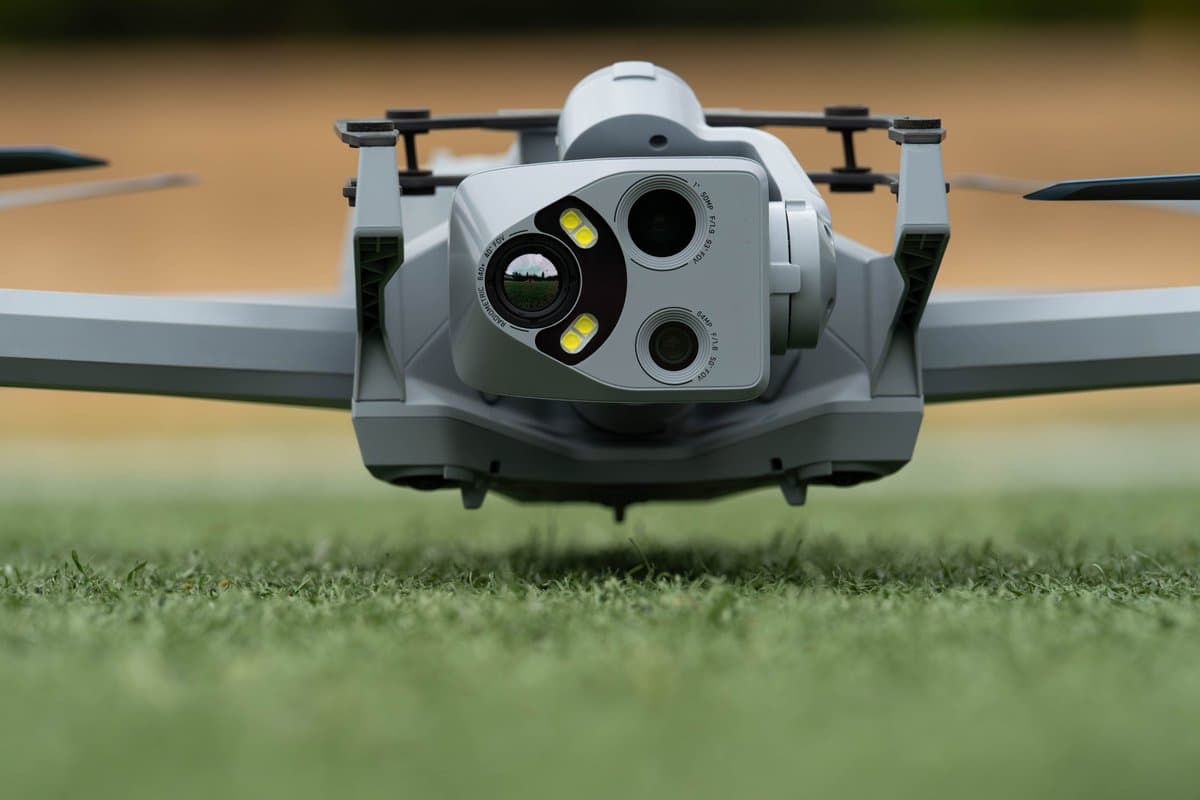
On Monday, June 29, at approximately 7:15 a.m. ET, a JetBlue pilot reported to air traffic control (ATC) that the Airbus A321 operating Flight 948 had struck a drone at roughly 3,000 feet while on final approach to John F. Kennedy International Airport (JFK). The overnight flight from Las Vegas landed safely at 7:21 a.m. — six minutes after the report. According to both JetBlue and the Federal Aviation Administration (FAA), a post-flight inspection revealed no aircraft damage and no physical evidence of any collision. The FAA stated it will open an investigation.
Before any outlet uses the word "strike" without quotation marks, that last detail deserves careful consideration. Nine years of covering pilot-reported drone encounters reveals a recurring pattern: a single cockpit sighting, no secondary confirmation, no recovered debris, no airframe damage, and an investigation that quietly points to something other than a drone. This incident already fits every one of those criteria. It may ultimately prove to be a genuine drone collision — which would make it one of only a handful of confirmed cases in U.S. airspace — or it may turn out to be a bird, a balloon, or windborne debris caught in early morning light. The facts are not yet settled, and honest reporting should reflect that.
FAA Statement Confirms Only a Limited Set of Facts
The FAA confirmed the incident in a brief, carefully worded statement. The agency said the pilot "reported" a strike rather than asserting one occurred, and explicitly noted that inspection found nothing wrong. The full text posted on X reads:
A JetBlue Airways Flight 948 pilot reported the aircraft was struck by a drone at approximately 3,000 feet while on final approach to Kennedy International Airport at approximately 7:15 a.m. local time Monday, June 29. A post-flight inspection found no damage to the aircraft. The FAA will investigate. Contact the airline for more information. This is preliminary information and subject to change.
Two phrases matter here. "Reported the aircraft was struck" places the assertion with the pilot, not with the agency. "Found no damage" signals that the physical evidence, as of the FAA's initial statement, does not support the verbal account. The FAA's final caveat — preliminary, subject to change — is not bureaucratic boilerplate; it is the agency declining to treat this as a confirmed drone strike, and readers should exercise the same caution.
ATC Audio Captures the Pilot's Real-Time Account
Audio recorded by ATC.com and first reported by New York's WABC captured the exchange between the JetBlue crew and the tower. With the aircraft inbound from the New Jersey coast and already cleared to land on Runway 13L, the pilot relayed the report almost as an aside while handing off to a busy controller.
"Real quick, I couldn't get approach, but we hit a drone on the back side coming around to ASALT, just wanted to let you know," the pilot said, referencing the ASALT waypoint on the approach procedure. The controller asked for clarification: "You said you hit one?" The pilot replied: "Yeah, it hit us, right above the cockpit." He indicated no assistance was needed and continued to landing.
According to Flightradar24 data cited by CNN, the A321 was located north of Sea Bright, a New Jersey barrier beach community, approximately 10–12 miles from JFK. The flight had departed Harry Reid International Airport in Las Vegas late the previous night. JetBlue subsequently took the aircraft out of service for inspection.
The pilot's description was specific and calm; there is no reason to doubt that he believed he hit something. But a pilot on approach, focused on landing, has a fraction of a second to identify a small object that flashes past the windshield. "Right above the cockpit" tells us where he felt the impact, not what the object was.
JetBlue Aligns With FAA: No Damage, No Evidence
JetBlue confirmed the incident and aligned with the FAA on the core physical question: nothing on the aircraft supports a collision. The airline said the flight landed safely and the inspection came up empty.
"Customers deplaned normally and the aircraft was taken for a post-flight inspection, which revealed no damage or evidence of a collision," the airline said in a statement, adding: "Safety is JetBlue's top priority and we will cooperate with any relevant investigation." Passengers disembarked through the gate, unaware of the report at the time.
Third Reported Drone Encounter Near New York in Four Days
The JetBlue report is not an isolated incident. It was the third reported drone encounter near a New York or New Jersey airport in four days — a concentration that partly explains the national media attention.
On Friday, June 26, the crew of United Airlines Flight 1513, a Boeing 737 inbound from Key West, told controllers they "almost hit a drone" approximately 100 feet below the aircraft on approach to Newark Liberty International Airport. Minutes later, a United Express flight operated by GoJet reported a drone sighting at roughly 2,000 feet on the same approach corridor.
This clustering carries meaning in both directions. If operators are deliberately flying near busy approach corridors, it represents a genuine risk that warrants serious attention. But a surge of reports also feeds expectation: when three accounts emerge in four days and every outlet follows the latest one, crews are more primed to "see" drones, and the public is more likely to report anything airborne as a drone. The FAA receives more than 100 drone sighting reports near airports each month, and has repeatedly found that most are ultimately attributed to manned aircraft, balloons, birds, or astronomical phenomena.
3,000 Feet: Illegal Under Any Regulatory Framework, and Physically Unusual
The reported altitude itself is notable. Federal regulations cap recreational and Part 107 commercial drone operations at 400 feet above ground level, with the sole exception allowing commercial operators to fly higher within 400 feet of a tall structure. Sea Bright is a low-lying barrier island; there are no 3,000-foot structures 10–12 miles off the New Jersey coast that would invoke that exception. A drone at that altitude and location would have been operating at roughly seven times any legal ceiling, in an active approach corridor, with no lawful basis whatsoever.
Physically, it is also anomalous. Most consumer drones have default altitude limits at or near 400 feet. While a determined operator can override those limits in app settings, reaching 3,000 feet with a small multirotor is not a casual act. Radio link quality degrades as a drone climbs beyond visual and radio range, GPS and control stability decrease, and winds at altitude are significantly stronger than at rooftop height. It is not impossible — people have done it, and a small number have been prosecuted for it. But a hobbyist accidentally drifting to 3,000 feet does not happen. A drone at that altitude got there because someone intentionally overrode their aircraft's default limits while violating multiple federal regulations. That scenario exists, but in terms of base probability, a bird or balloon striking a windshield at approach speed is a more likely explanation than a deliberate rogue drone flight — which is precisely why swab results matter.
Confirmed Drone Strikes on U.S. Airliners Remain Extremely Rare
The case for caution rests on statistics, not contrarianism. Despite years of alarming headlines, the number of absolutely confirmed drone-versus-manned-aircraft collisions in the United States can be counted on one hand. Credible cases involve recovered drone debris, identifiable fragments, or strike damage with no biological residue — where lab analysis traces the impact to a man-made object rather than an animal.
FAA investigators have made this point repeatedly. Lab testing can detect biological residue on an aircraft surface even when no feathers or blood are visible — which is why a strike that "felt like a drone" can be reclassified as a raptor weeks later. Most bird strikes occur below 3,000 feet, precisely the altitude range where this JetBlue encounter was reported, and the altitude band where aircraft on approach are most exposed. A bird at 3,000 feet off the New Jersey coast at dawn is unremarkable. So is a metallic balloon riding a thermal from the shore. Investigators will swab the A321's airframe, and those results will be more informative than any cockpit account.
None of this excuses operators who genuinely fly into controlled airspace. Flying drones near aircraft, helicopters, or airports is illegal, and the FAA has been explicit that violators face substantial fines, criminal prosecution, and potential imprisonment. If someone was actually flying a drone on the JFK approach corridor on Monday morning, they endangered more than 100 passengers and should face full consequences. The narrower question is whether that is what actually happened — and that is not yet known.
DroneXL Editorial Perspective
Wait for the lab results before reaching a verdict. This story has been written before — almost word for word. In April, a United Airlines Boeing 737-800 crew reported a drone strike at 3,000 feet on approach to San Diego. The account began unraveling within hours: inspection found nothing, the FBI determined there was no public safety concern, and United removed the word "strike" from its own statement, replacing it with "no indication the plane struck anything." The pilot's complete description of the object was three words: red, shiny, small. As drone-policy expert Brendan Schulman noted at the time, balloons are also red and shiny.
The position here is straightforward: this is currently a pilot report unsupported by any physical evidence. The responsible word is "reported," not "confirmed." Every outlet framing "plane hit by drone" as established fact is writing a headline that generates clicks, while the FAA, the airline, and the materials lab will eventually write a quieter, more accurate one. If swabs of that A321 return polycarbonate, lithium residue, or motor fragments, this article will be updated immediately and the operator should be prosecuted. That is the standard — not a high one, but it requires evidence.
What is more troubling than any single Monday morning incident is the narrative machine these reports feed. With the FIFA World Cup underway, anti-drone funding flowing, and Temporary Flight Restrictions (TFRs) stacked across the U.S. Northeast, three "drone" headlines in four days is precisely the environment in which panic overtakes fact and legislators reach for a fleeting windshield glimpse as the basis for new law. This has happened before: during the 2024 New Jersey drone panic, federal agencies ultimately traced thousands of "drone" reports to manned aircraft and the planet Jupiter; in European airport closure incidents, one pilot's drone was another pilot's balloon. Before anyone uses a fraction-of-a-second approach-speed sighting as the foundation for legislation, wait for JFK's inspection results. The drone industry has paid the price for these headlines before, and the bill always arrives — whether or not a drone was ever in the sky.
Sources: CNN, FOX 5 New York, ABC News, FAA statement via X.
原文來源: 查看原文
FAQ
Newsletter
Subscribe to our Low-Altitude Industry Newsletter
Daily curated news on low-altitude economy and drone industry, delivered to your inbox.