Marc Andreessen Joins Pentagon Defense Policy Board While a16z Holds Stakes in DJI-Ban Beneficiaries
Venture capitalist Marc Andreessen was appointed to the Pentagon's Defense Policy Board on June 29, 2026. His firm, Andreessen Horowitz (a16z), holds significant stakes in Skydio, Anduril, and Flock Safety — companies that have directly benefited from regulatory actions excluding DJI from U.S. public-safety fleets — raising serious conflict-of-interest concerns.

Highlights
- Secretary of Defense Pete Hegseth appointed Marc Andreessen to the Pentagon's Defense Policy Board on June 29, 2026, alongside 13 other members including chairman Robert Lighthizer.
- Andreessen Horowitz led Skydio's $170 million Series D in 2021, valuing the company at $1 billion; Skydio is the largest U.S. commercial beneficiary of federal efforts to exclude DJI from public-safety procurement.
- a16z co-founder Ben Horowitz donated $7.6 million to the Las Vegas Metropolitan Police Department, funding purchases of Skydio drones, Flock Safety cameras, and Prepared AI software — all a16z portfolio companies.
- Skydio's federal lobbying expenditure surged from $10,000 in 2019 to approximately $560,000 in 2023 as it pushed for DJI bans at state and federal levels.
- The Defense Policy Board advises the Pentagon offices that control the Blue UAS list and national-security determinations exempting domestic drone platforms from covered-list prohibitions effective December 2025.
Marc Andreessen Joins Pentagon Defense Policy Board While a16z Holds Stakes in DJI-Ban Beneficiaries
Secretary of Defense Pete Hegseth on Monday, June 29, 2026, appointed venture capitalist Marc Andreessen to the Defense Policy Board — a senior advisory panel that counsels the Pentagon's top civilian leadership on force structure, modernization, and national security strategy. Andreessen, co-founder of Andreessen Horowitz, was named alongside thirteen other members, including Board chairman and former U.S. Trade Representative Robert Lighthizer and vice chairman former Minnesota Senator Norm Coleman.
For most outlets, the headline is Silicon Valley's deepening integration with the defense establishment. For drone-industry observers, the story carries a sharper edge: Andreessen Horowitz (a16z) holds positions in Skydio, Flock Safety, Anduril, and other defense-technology companies that broadly benefit from the regulatory environment the Pentagon has helped engineer. Skydio, in particular, is the largest American commercial beneficiary of the federal effort to remove DJI from U.S. public-safety fleets — an effort advanced through the Department of Defense, its Blue UAS certified-systems list, and the very policy mechanisms the Defense Policy Board now advises on.
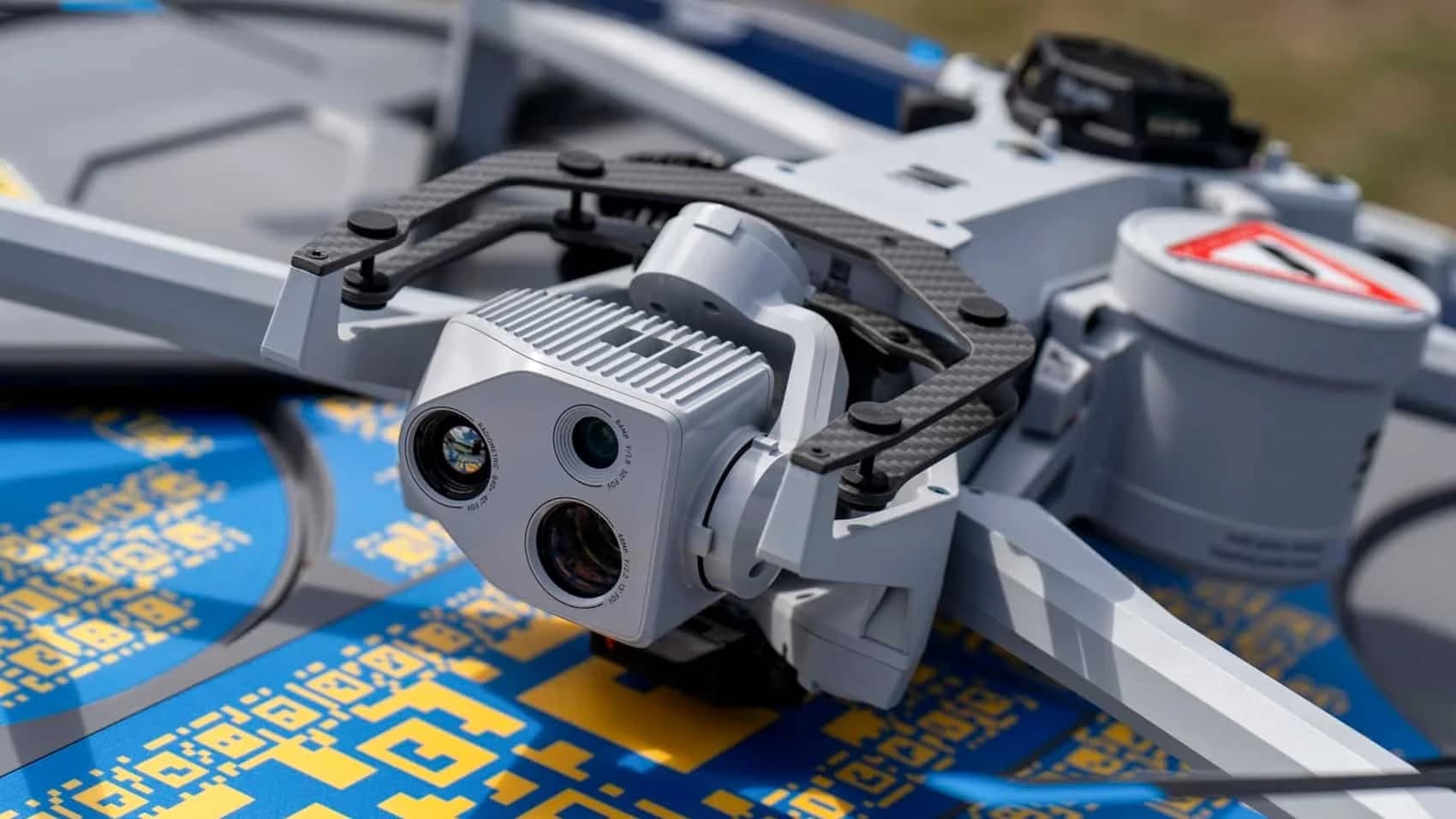
Skydio drone. Photo credit: Port St. Lucie Police Department
a16z's Drone Portfolio Reads Like a Blue UAS List
The DoD announcement listed Andreessen first among the thirteen non-chair appointees. The firm he leads led Skydio's Series A in 2015 and its $170 million Series D in 2021, valuing the San Mateo-based drone manufacturer at $1 billion. a16z's American Dynamism practice — led by general partner David Ulevitch — counts Skydio, Flock Safety, and Anduril as core holdings. All of these companies sell to the same pool of federal, defense, and public-safety procurement agencies whose purchasing rules are set by Pentagon offices that report to the Defense Policy Board.
The entanglement extends beyond any single portfolio company. Skydio's primary route into police departments runs through its partnership with Axon, the Taser and body-camera manufacturer that became Skydio's exclusive public-safety distributor in 2021 and expanded that into a full Drone as First Responder solution in 2024. When police departments buy Skydio drones, they typically buy Axon evidence-management software, Axon body cameras, and Axon Tasers alongside them. The autonomous aerial layer is embedded inside an existing law-enforcement hardware ecosystem.
That matters because the Defense Policy Board's explicit mandate covers force structure, modernization, and the policy implications of U.S. supply chains. Statements from a16z over the past year have consistently framed the firm's defense investments as "American Dynamism" — the idea that software, autonomy, and domestic industrial capacity are instruments of national power. That is a coherent worldview. It is also a sales narrative for a specific cluster of companies in which a16z holds equity.
DroneXL Has Documented a16z's Police-Drone Funding Pipeline
The pattern of a16z principals funding police procurement of a16z portfolio products is not hypothetical, and it is not new. This publication reported directly on it when co-founder Ben Horowitz began donating $7.6 million to the Las Vegas Metropolitan Police Department starting in 2023. As DroneXL documented in its coverage of the Las Vegas case, Horowitz's donations funded Skydio drones, Flock Safety cameras, and Prepared's AI-powered 911 software — all a16z portfolio companies. A TechCrunch investigation found that a Las Vegas police captain who had championed Skydio internally later left the department and took a program-manager role at Skydio.
In January 2026, Las Vegas Metro unveiled its expanded drone operations center, with the Horowitz Family Foundation listed among private sponsors. As DroneXL reported when covering what is now the largest police drone program in the United States, the department had conducted 10,000 drone missions in a single year while declining to disclose any cost information publicly. That funding model — routing private venture capital through police foundations into portfolio-company hardware — has now been elevated to a Pentagon advisory-board level.
The pattern is not confined to Las Vegas. DroneXL has documented the broader dynamic in which Silicon Valley investors fund American-made police drone fleets while the same companies and their allies lobby to exclude Chinese competitors. Skydio's federal lobbying expenditure rose from $10,000 in 2019 to approximately $560,000 in 2023 as the company pivoted to pushing state-level DJI bans after federal-level efforts stalled.
The Defense Policy Board Sits Upstream of the Mechanisms That Decide Drone Market Winners
The Defense Policy Board was established in 1985 to provide independent strategic advice to the Secretary of Defense, the Deputy Secretary, and the Under Secretary for Policy. It does not write procurement contracts or sign equipment authorizations. Its influence operates upstream of those decisions — at the level of shaping the strategic frameworks that determine which technologies the Pentagon prioritizes and which supply chains it treats as threats.
That upstream position is precisely where the DJI contest has been decided. It was not Congress or the FCC, but the Department of Defense that issued the national-security determinations that carved Blue UAS platforms out of the covered-list prohibitions taking effect in December 2025. As DroneXL detailed when those exemptions were published, the real authority has migrated into the Pentagon — which now determines, through the Blue UAS list and a 65-percent domestic-content threshold, which drones U.S. agencies may purchase. A board that advises the Pentagon's policy leadership is a board that advises the institution holding the pen.
The other appointees sharpen the picture. Blake Masters, former chief operating officer of Thiel Capital, was named alongside Andreessen. Both operate within the same venture-capital network that has spent the past five years arguing that the Pentagon should buy more commercial software and autonomy from startups — a position that benefits the startups they back. As The Hill noted, a16z investments include OpenAI, SpaceX, Skydio, Hadrian, and Anduril, all of which hold Pentagon contracts. InsideDefense reported the same overlap and added xAI, Applied Intuition, Saronic, and Shield AI as a16z-backed companies holding multiple DoD contracts.
The Conflict-of-Interest Problem Is Built Into the Board's Own Rules
The Federal Register notice reconstituting the Defense Policy Board states that members are appointed to provide their best judgment "without representing any particular point of view and without any conflict of interest." That is the stated standard. Whether a venture capitalist whose firm holds equity in defense and drone companies that are active Pentagon contractors can advise the Pentagon without a conflict of interest is the question this appointment raises — and does not answer.
Advisory board members typically file financial disclosures and recuse themselves from matters directly touching their holdings. Those mechanisms have not been published for this board, and the practical influence of a strategic advisory seat is far harder to ring-fence than a specific contract vote. The value of being in the room lies in the frameworks you bring, and frameworks do not appear on recusal filings.
DroneXL's Perspective
Let me be precise about what the problem is and what it is not. The problem is not whether Marc Andreessen is intelligent, whether American autonomous drones are harmful, or whether the Pentagon should consult people who have actually built things. Skydio makes excellent hardware. Anduril is a serious company. This editor, like any reader, wants to see a healthy American drone industry.
The problem is the closed loop: a venture firm funds American drone companies; a senior partner at that same firm personally funds police departments that buy those drones; the firm's portfolio companies lobby to ban Chinese competitors that outperform them on cost; now the firm's co-founder has a seat advising the Pentagon offices that determine which drones are "trusted" and which are "threats." Every link in that chain is packaged as patriotism, public safety, or American Dynamism. Stacked together, it looks less like a worldview and more like a business model wearing a flag.
That is precisely the thread this publication has pulled throughout its DJI-ban coverage. The publicly documented security justifications have never convincingly supported grounding functional, affordable Chinese drones; follow the money and the protectionist rationale is self-evident. Florida retired $200 million worth of still-functional DJI drones and replaced them with Blue UAS platforms costing three to fourteen times as much. American operators and taxpayers are paying that premium, and the people collecting it are increasingly the same people advising the government to mandate it.
This is not an accusation that Andreessen has broken any rule. It is an observation that the existing rules were not designed for this. When DroneXL reported on Skydio's $4.4 billion Series F in April, CEO Adam Bry was candid that the company's improved unit economics stem from "more and more state and federal agencies effectively blocking DJI in their procurement pipelines." Remove that policy tailwind and the numbers change. Andreessen is now closer to the lever controlling that tailwind than any other drone-industry investor. Watch what the Defense Policy Board says about commercial drone supply chains and covered-list policy over the next twelve months. If the strategic frameworks emanating from the Pentagon start sounding like an a16z investment deck, you will know which way the wind is blowing — and who is standing behind the fan.
Sources: U.S. Department of Defense, Federal Register, The Hill, Washington Examiner, InsideDefense, TechCrunch.
DroneXL uses automated tools to assist with research and data retrieval. All reporting and editorial commentary is written by Haye Kesteloo.
原文來源: 查看原文
FAQ
Newsletter
Subscribe to our Low-Altitude Industry Newsletter
Daily curated news on low-altitude economy and drone industry, delivered to your inbox.