MIT Breakthrough Imaging Technology Captures Clear 3D Images at 20 Meters in Murky Water
A MIT engineering team has developed a revolutionary underwater imaging system combining single-photon detectors with advanced algorithms, capable of capturing detailed 3D images at distances up to 20 meters (65 feet) in extremely turbid water. The technology has promising applications for underwater drones and autonomous underwater vehicles (AUVs).

Highlights
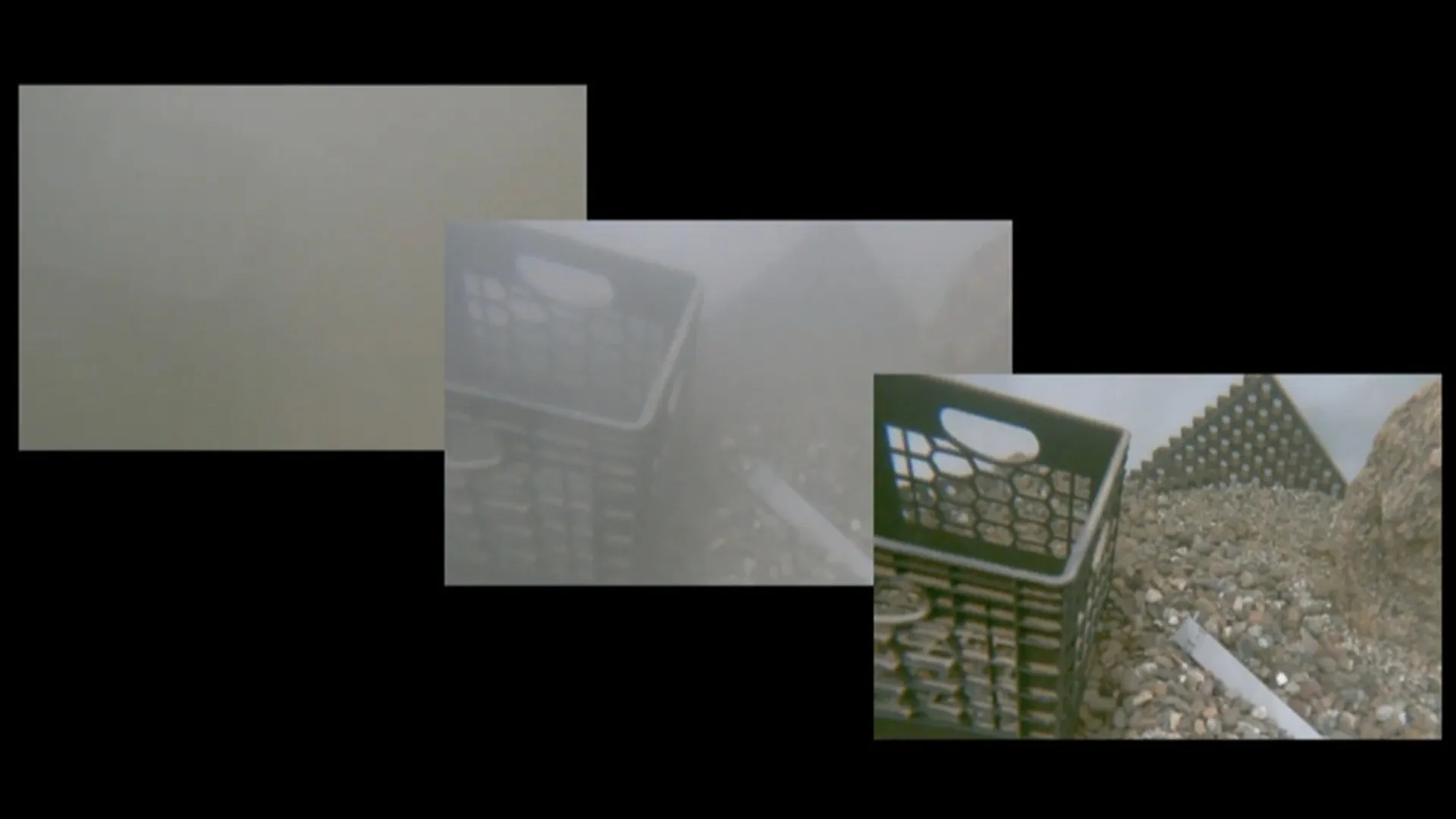
- MIT's new underwater imaging system captures clear 3D images at distances of up to 20 meters in water so turbid that conventional cameras cannot see beyond 3 centimeters.
- The system uses a pulsed laser and a single-photon avalanche diode (SPAD) array to detect returning photons and reconstruct 3D scenes from sparse, scattered data.
- The technology is energy-efficient and compact enough to be integrated into underwater drones, ROVs, and autonomous underwater vehicles (AUVs).
- Key applications include search-and-rescue operations, marine biology research, archaeological discovery, and underwater infrastructure inspection of pipelines, bridges, and dams.
- Researchers are currently working to improve imaging speed and resolution, with a long-term goal of deploying the system for continuous monitoring of oceans, lakes, and rivers.
MIT Pushes the Limits of Underwater Imaging
An engineering team at the Massachusetts Institute of Technology (MIT) has developed a groundbreaking imaging system capable of capturing detailed 3D images in extremely turbid underwater environments. The new technology, which combines single-photon detectors with advanced computational algorithms, has the potential to significantly enhance underwater exploration, search-and-rescue operations, and environmental monitoring.
The Challenge with Conventional Underwater Imaging
Traditional underwater imaging methods — such as sonar and optical cameras — have long struggled to provide clear visual imagery in murky conditions. Suspended particles in water scatter light, making it virtually impossible to see beyond a few meters (approximately 6.5 feet) in highly turbid conditions.
MIT's new system, however, is able to generate sharp three-dimensional images at distances of up to 20 meters (65.6 feet) in water with extreme turbidity.
How the Technology Works
At the heart of the system is a pulsed laser that fires light pulses into the water. When these pulses strike an object and bounce back, they are detected by a highly sensitive single-photon avalanche diode (SPAD) array.
The system records the travel path of each photon to calculate the precise distance and shape of underwater objects — and it remains effective even when only a very small number of photons successfully return through stirred-up sediment.
To interpret these faint signals, the research team developed new computational algorithms capable of reconstructing 3D scenes from sparse, scattered data. The result is detailed imagery that would be completely impossible to capture with conventional cameras under the same conditions.
Potential Applications and Future Impact
According to the MIT team, this imaging breakthrough could transform a wide range of underwater activities. Search-and-rescue teams could locate missing persons or objects more quickly in turbid lakes or coastal waters. Marine biologists could study habitats previously obscured by sediment, and archaeologists may be able to discover ancient shipwrecks buried beneath layers of silt.
The technology also holds significant value for inspecting underwater infrastructure — such as pipelines, bridges, and dams — where safety and imaging clarity are critical requirements.
Testing and Results
The research team tested their prototype in a specially designed water tank where turbidity was so high that a standard camera could not see beyond 3 centimeters (approximately 1.2 inches). Their new system successfully imaged objects at a distance of 20 meters (65.6 feet) — a feat previously considered impossible under such conditions.
The system is also highly energy-efficient, requiring less power than conventional active imaging methods, and is compact enough to be mounted on underwater drones or remotely operated vehicles (ROVs).
Looking Ahead
While the current prototype already represents a major technological leap, researchers are already working to improve the technology with the goal of increasing imaging speed and resolution. They envision integrating it into autonomous underwater vehicles (AUVs) for continuous monitoring of oceans, lakes, and rivers.
MIT's new imaging system marks a significant step forward in overcoming underwater visibility challenges, potentially opening a new era in underwater exploration and safety.
原文來源: 查看原文
FAQ
Newsletter
Subscribe to our Low-Altitude Industry Newsletter
Daily curated news on low-altitude economy and drone industry, delivered to your inbox.