NASA CAPSTONE Mission Concludes Successfully, Validating Autonomous Lunar Navigation and Deep-Space Communications Technologies
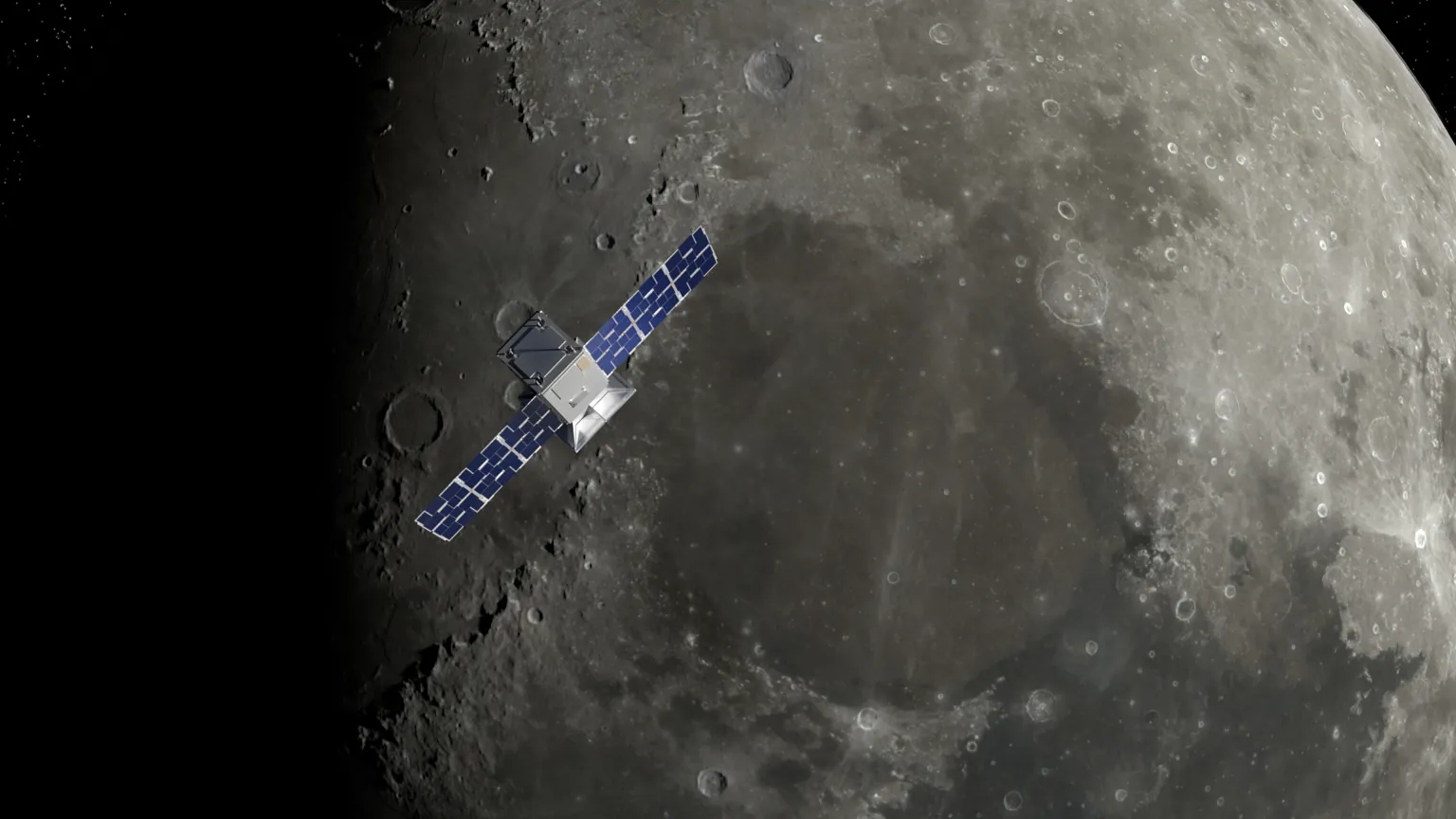
NASA's CAPSTONE spacecraft, launched in June 2022, has completed all primary and extended mission objectives. The mission successfully demonstrated autonomous navigation, guidance, and control (autoNGC) software in lunar orbit for the first time, and validated the latest Delay/Disruption Tolerant Networking (DTN) protocol beyond Earth orbit. NASA formally concluded mission activities in June 2026, while Advanced Space continues to operate the spacecraft as a technology testbed.

Highlights
- NASA's CAPSTONE spacecraft, launched June 2022 and owned by Advanced Space, completed all primary and 15-month extended mission objectives before NASA formally ended activities in June 2026.
- CAPSTONE validated the autoNGC autonomous navigation software in lunar orbit for the first time, using onboard star-tracker cameras to achieve positioning accuracy that surpassed traditional ground-based methods in some scenarios.
- CAPSTONE became the first spacecraft to fly the latest DTN (Delay/Disruption Tolerant Networking) protocol beyond Earth orbit, successfully storing and retransmitting data after mid-transfer communication interruptions.
- NASA demonstrated that new applications can be deployed post-launch on existing spacecraft hardware, transforming CAPSTONE into a software-defined satellite and reducing the cost of lunar technology demonstration.
- Technologies validated by CAPSTONE will underpin NASA's growing lunar communications and navigation infrastructure in support of long-term Artemis program exploration goals.
NASA CAPSTONE Mission Concludes Successfully, Validating Autonomous Lunar Navigation and Deep-Space Communications Technologies
NASA's Cislunar Autonomous Positioning System Technology Operations and Navigation Experiment (CAPSTONE) has completed all primary and extended mission objectives, paving the way for sustained human presence on the Moon.
Mission Background
Launched in June 2022, CAPSTONE became the first U.S. commercial lunar mission. The microwave-oven-sized spacecraft is owned and operated by Advanced Space, and was tasked with testing and validating critical technologies in lunar orbit. It was the first spacecraft ever to fly and fully characterize a "three-body orbit" — a trajectory that leverages the combined gravitational pull of Earth and the Moon to significantly reduce the fuel required to maintain a stable lunar orbit.
Following the completion of its primary mission, CAPSTONE received a 15-month mission extension, transforming it into an experimental platform for advanced communications, networking, autonomous navigation, and software-defined satellite technologies.
Software-Defined Satellite: New Capabilities Without New Hardware
NASA's Space Technology Mission Directorate demonstrated a significant concept: new applications can be deployed post-launch on existing hardware, without launching a new spacecraft. This approach turned CAPSTONE into a cost-effective and flexible lunar technology demonstration platform.
"Running multiple experiments simultaneously on the same spacecraft allowed NASA to evaluate how these technologies perform together in a real lunar environment," said Greg Stover, director of the Advanced Research and Technology division within NASA's Space Technology Mission Directorate at NASA Headquarters. "Investment in autonomous operations and resilient communications infrastructure is essential to ensuring the United States maintains its leadership position as lunar activities continue to grow."
autoNGC: First Lunar-Orbit Test of Autonomous Navigation Software
Two core experiments aboard CAPSTONE advanced key capabilities for future missions through software-defined architecture. The first was the Autonomous Navigation, Guidance, and Control (autoNGC) software, designed to allow a spacecraft to determine its own position, orientation, and flight path without waiting for commands from the ground. While portions of the software had previously been tested in Earth orbit, CAPSTONE marked autoNGC's first-ever validation in lunar orbit.
"To really prove something works, you have to fly it," said Sun Hur-Diaz, autoNGC technology development principal investigator at NASA's Goddard Space Flight Center in Greenbelt, Maryland. "The real environment is what matters."
During the Artemis II crewed lunar flyby test flight, NASA's Deep Space Network antenna resources were heavily committed, reducing CAPSTONE's communication windows to just a few sessions per week. These communication blackout periods became some of the most valuable test scenarios in the experiment. Without ground data available, autoNGC used an onboard star-tracker camera to image the Moon, Earth, and other celestial bodies — a technique known as optical navigation — to determine the spacecraft's position. In some cases, this camera-based navigation system demonstrated real-time positioning accuracy that surpassed traditional ground-based methods, significantly advancing the state of the art for future deep-space missions.
DTN: First Deep-Space Flight of the Latest Protocol Beyond Earth Orbit
In addition to autonomous navigation, CAPSTONE tested Delay/Disruption Tolerant Networking (DTN) — a communications architecture designed specifically for deep-space environments. Unlike the internet systems used on Earth, deep-space communications must function reliably under conditions of long signal delays and frequent disruptions. The DTN approach stores data onboard the spacecraft when a connection is unavailable, then automatically forwards it once contact is restored.
CAPSTONE became the first spacecraft to fly the latest version of the DTN protocol beyond Earth orbit, and the first to run DTN on NASA's Core Flight System — an open-source framework deployable on any spacecraft.
In one live demonstration, engineers began transmitting data from CAPSTONE to Earth when the connection was interrupted mid-transfer. The spacecraft held the remaining data in storage and automatically resumed transmission at the next communication opportunity — delivering all data back to Earth intact.
"Imagine an astronaut walking behind a lunar hill or descending into a crater, temporarily losing their communications link," said Ben Anderson, Near Space Network systems engineer at NASA's Goddard Space Flight Center. "This technology allows data to automatically retransmit once the connection is restored."
Mission Wrap-Up
NASA formally concluded CAPSTONE-related activities in June 2026. Advanced Space will continue to operate the spacecraft as a technology development testbed.
The CAPSTONE spacecraft was designed and built by Terran Orbital and is owned and operated by Advanced Space. NASA's Space Technology Mission Directorate managed the mission through the Small Spacecraft and Distributed Systems program, located at NASA's Ames Research Center in Silicon Valley, California. The autoNGC and DTN extended-mission demonstrations were managed by the Space Communications and Navigation (SCaN) program at NASA Headquarters.
The technologies validated during this mission will serve as important building blocks for NASA's growing lunar communications and navigation infrastructure, providing critical support for the long-term lunar exploration goals of the Artemis program.
原文來源: 查看原文
FAQ
Newsletter
Subscribe to our Low-Altitude Industry Newsletter
Daily curated news on low-altitude economy and drone industry, delivered to your inbox.
Reviewed and published by the LAETimes editorial desk ·