All-Ceramic Solid-State Battery Withstands 150°C, Targeting Military and Aerospace Drone Applications
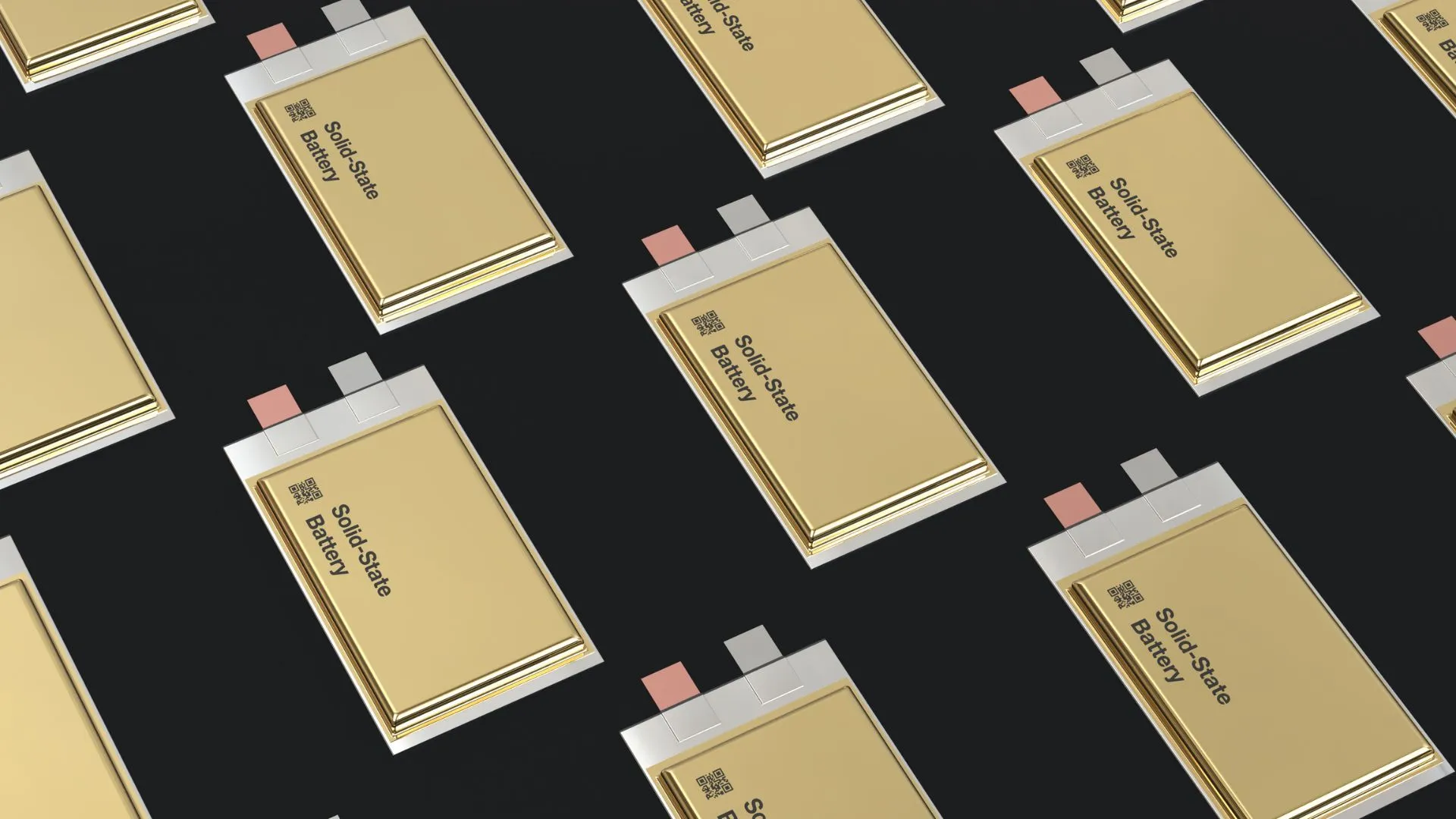
A research team led by Tsinghua University has developed an All-Ceramic Multilayer Lithium-ion Battery (ACMLB) capable of stable operation from 0°C to 150°C and surviving 300°C thermal shocks for 20 seconds. The non-flammable battery requires no external pressure, retains 76.2% capacity after 100 charge-discharge cycles, and targets military, aerospace, and wearable micro-electronics applications. Findings were published in the journal Matter.

Highlights
- Tsinghua University's ACMLB operates stably across a 0°C–150°C temperature range and survives 300°C thermal shocks for up to 20 seconds.
- A 10-cell parallel ACMLB pack retained 76.2% of its initial 105 μAh capacity after 100 charge-discharge cycles at room temperature.
- The all-ceramic design is completely non-flammable and requires no external pressure to maintain structural integrity.
- Multilayer co-sintering technology resolves the thinness-versus-strength trade-off in oxide electrolytes, enabling both high energy density and mechanical robustness.
- The battery can be manufactured in ambient air rather than vacuum conditions, potentially lowering production costs for military, aerospace, and wearable applications.
All-Ceramic Solid-State Battery Withstands 150°C, Targeting Military and Aerospace Drone Applications
A research team led by Tsinghua University in China has successfully developed a miniature All-Ceramic Multilayer Lithium-ion Battery (ACMLB), designed to deliver safe and stable power to micro-electronic devices operating in extreme environments.
Impressive High-Temperature Performance
According to the research paper, the battery operates reliably at temperatures up to 150°C (302°F) and can endure instantaneous thermal shocks of 300°C (572°F) for as long as 20 seconds without sustaining damage.
The researchers noted in the paper: "The ACMLB demonstrates excellent electrochemical performance over a wide temperature range (0°C–150°C), with non-flammability and high safety, providing a reliable and high-performance power solution for wearable micro-electronic devices."
Addressing the Safety Risks of Conventional Lithium Batteries
Conventional lithium-ion batteries are widely used for their high energy density, but their liquid electrolytes pose serious fire and explosion risks when exposed to high temperatures or physical damage. This safety vulnerability limits their use in harsh environments such as aerospace equipment, military applications, and industrial IoT sensors.
Solid-state lithium batteries replace liquid electrolytes with solid materials, offering a non-flammable alternative. However, developing a fully ceramic version for miniature devices has long faced a fundamental engineering trade-off: thinness versus structural strength—ceramic layers thin enough for micro-electronics tend to lack the mechanical robustness required to prevent structural failure.
Multilayer Stacking Technology Overcomes Manufacturing Bottleneck
The Tsinghua team addressed this challenge through an elegant manufacturing approach: multilayer ceramic stacking.
This architecture effectively resolves the classic engineering dilemma of oxide electrolytes—maintaining the thinness needed for high energy density while ensuring sufficient mechanical integrity to prevent structural damage, and allowing the capacity of individual cells to be scaled up.
During the co-sintering process (in which all materials are heated and sintered together), a specialized chemical interfacial layer naturally forms at the boundaries between layers. This microscopic interface fills all internal voids within the battery, simultaneously bonding the layers firmly together and enabling rapid lithium-ion conduction.
Suited for Miniature and Wearable Devices
The all-ceramic battery is highly customizable and stackable, making it easy to adjust specifications for different devices while maintaining stable performance across a wide range of temperatures.
To illustrate: at 150°C, a standard smartphone battery would swell, rupture, or undergo thermal runaway within minutes—yet this ceramic battery remains unaffected.
Room-temperature testing also yielded strong results. Technical data in the paper states: "A set of 10 ACMLBs connected in parallel, subjected to long-term cycling at a current density of 50 μA cm⁻² at room temperature, delivered an initial capacity of 105 μAh and retained 80 μAh after 100 cycles, representing a capacity retention rate of 76.2%."
Furthermore, the battery requires no external pressure to maintain its shape and can be manufactured in ambient air rather than in costly vacuum environments, potentially reducing production costs significantly.
The paper further states: "The battery is completely non-flammable and maintains its structural integrity under sustained external combustion, exhibiting excellent thermal stability in air—representing a significant safety advantage over batteries using liquid, polymer, or composite electrolytes."
Outlook
The research team believes this innovation has the potential to accelerate the commercialization of all-solid-state electronics in the miniature and wearable device sectors. With its combination of high energy density and non-flammable safety characteristics, the battery is seen as an ideal candidate for next-generation applications spanning smart sensors, aerospace equipment, and military use cases.
The research has been published in the international academic journal Matter.
原文來源: 查看原文
FAQ
Newsletter
Subscribe to our Low-Altitude Industry Newsletter
Daily curated news on low-altitude economy and drone industry, delivered to your inbox.