China-Russia Joint Strategic Patrol Deploys Over 15 Warplanes; U.S. F-35s and Japanese, South Korean Jets Scrambled to Intercept
On June 27, 2026, China and Russia conducted their 11th joint strategic air patrol, deploying more than 15 military aircraft over the Sea of Japan, East China Sea, and the western Pacific for approximately six hours. The expanded formation included bombers, airborne early warning aircraft, electronic warfare planes, and tankers, prompting scrambles by U.S. Air Force F-35As, Japanese F-15Js, and South Korean fighters. Both Tokyo and Seoul filed formal diplomatic protests.

Highlights
- On June 27, 2026, China and Russia conducted their 11th joint strategic air patrol, deploying over 15 warplanes across the Sea of Japan, East China Sea, and western Pacific for approximately six hours.
- The Russian formation included two Tu-95MS strategic bombers and two Tu-142 maritime patrol aircraft, escorted by Su-35S and Su-30SM fighters on select legs.
- China's contingent featured four H-6 bombers, J-16 and J-10C fighters, YY-20A tankers, KJ-500 AEW&C aircraft, and Y-9 electronic warfare variants.
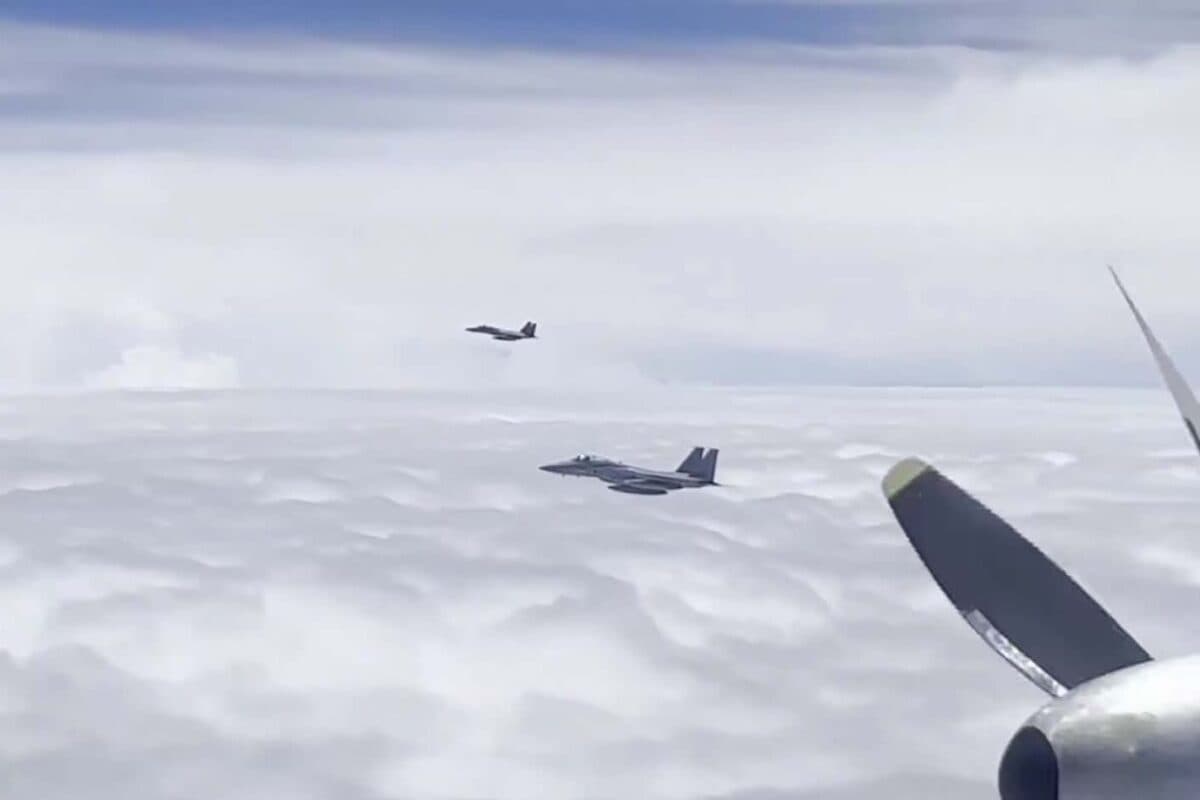
- U.S. Air Force F-35A Lightning IIs, Japanese F-15Js, and South Korean fighters scrambled to intercept and shadow the joint formation.
- Japan and South Korea filed formal diplomatic protests; Seoul summoned Chinese and Russian envoys on June 28, 2026, while Beijing defended the mission as routine annual cooperation.
China-Russia Joint Strategic Patrol Deploys Over 15 Warplanes; U.S. F-35s and Japanese, South Korean Jets Scrambled to Intercept
On June 27, 2026, China and Russia conducted their 11th joint strategic air patrol, dispatching more than 15 military aircraft over the Sea of Japan, East China Sea, and the western Pacific in a mission lasting approximately six hours. The operation triggered intercept responses from U.S. Air Force, Japanese, and South Korean fighter jets.
China's Ministry of National Defense stated that the patrol demonstrated both nations' "determination and capability to jointly safeguard regional peace and stability." Russia's Ministry of Defense characterized the mission as part of its 2026 military cooperation plan and noted that the bombers were shadowed by foreign fighter aircraft during certain segments of the flight.
A Larger, More Complete Formation
Unlike previous patrols that primarily featured bomber pairs escorted by fighters, this mission was supported by a more comprehensive package of assets, including aerial refueling tankers, airborne warning and control aircraft, and electronic warfare platforms.
According to flight track data and imagery released by Japan's Joint Staff Office, the Russian component included two Tu-95MS strategic bombers and two Tu-142 maritime patrol aircraft, with Su-35S and Su-30SM fighters providing escort on certain legs.
China deployed four H-6 bombers and J-16 fighters. Imagery released by the People's Liberation Army Air Force also showed YY-20A aerial refueling tankers, KJ-500 airborne early warning and control aircraft, Y-9 electronic warfare and signals intelligence variants, as well as J-10C and J-11 fighters.
Footage released by Russia's Ministry of Defense showed two U.S. Air Force F-35A Lightning II fighters flying alongside Russian aircraft. Japanese Air Self-Defense Force F-15J fighters were also photographed escorting and monitoring the formation.
Tokyo and Seoul File Formal Protests
Japan's Ministry of Defense reported that Western Air Defense Force aircraft scrambled to track the bombers from early morning through the afternoon of June 27, including a segment transiting from the East China Sea to the Pacific Ocean south of Shikoku.
South Korea's Joint Chiefs of Staff stated that the Chinese and Russian formation entered and exited South Korea's Air Defense Identification Zone (KADIZ) over waters to the east and south of the peninsula, prompting a tactical response sortie.
Both governments filed formal protests through diplomatic channels. Seoul summoned representatives from the Chinese and Russian embassies on June 28, 2026. China's Ministry of Foreign Affairs said Tokyo had no cause for overreaction, describing the patrol as routine annual cooperation.
China and Russia have conducted joint strategic air patrols since 2019, when bombers from both countries simultaneously entered South Korea's air defense identification zone for the first time. Since then, the two nations have typically carried out one to two such patrols per year.
原文來源: 查看原文
FAQ
Newsletter
Subscribe to our Low-Altitude Industry Newsletter
Daily curated news on low-altitude economy and drone industry, delivered to your inbox.