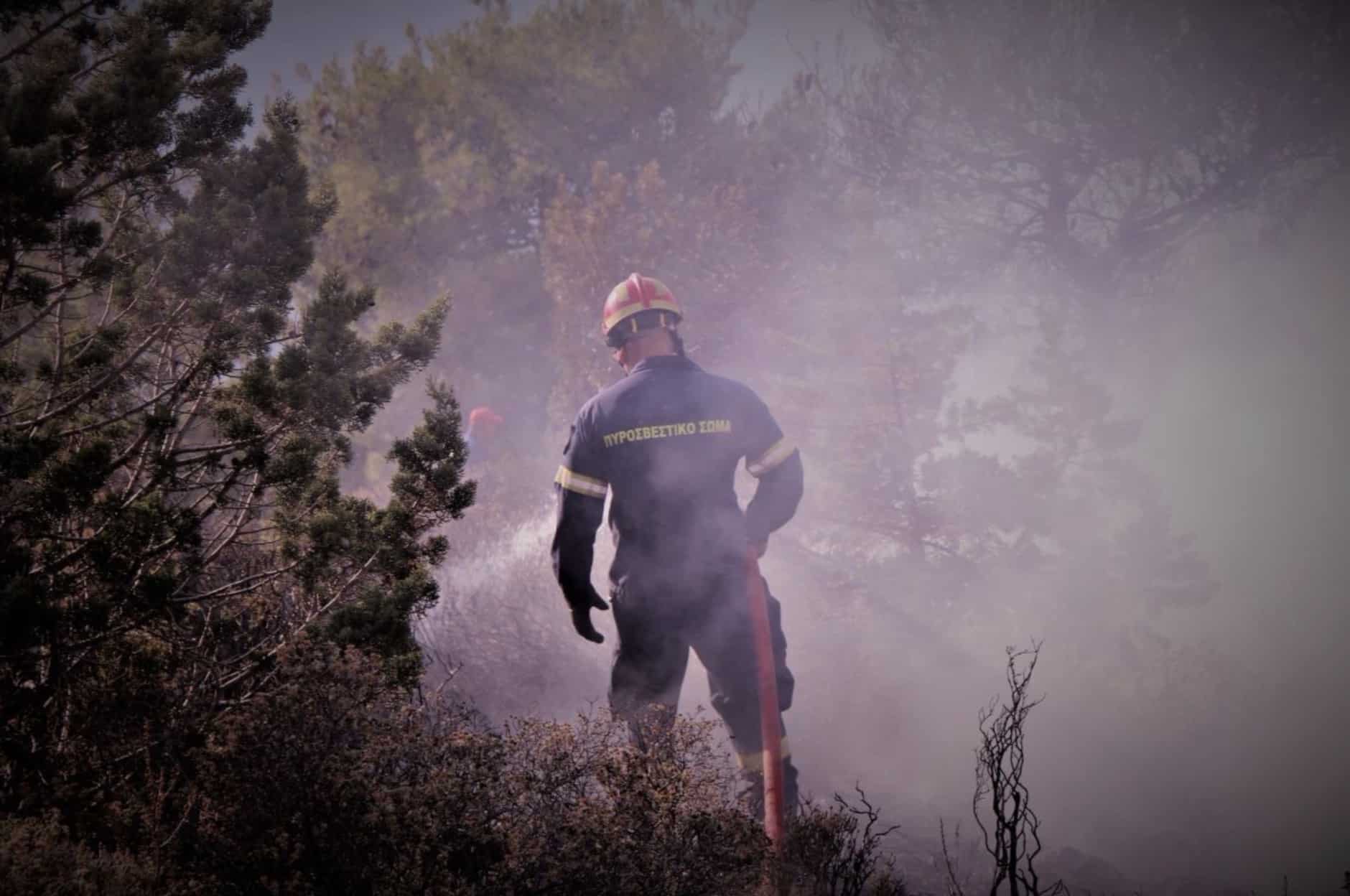
Greece to Deploy Over 100 Drone Monitoring Bases for 2026 Wildfire Season in Largest-Ever Rollout
Greece has announced plans to deploy more than 100 drone monitoring bases and three mobile command centers equipped with thermal imaging cameras for the 2026 wildfire season — the country's largest-ever wildfire detection deployment. Unveiled at a meeting chaired by Prime Minister Kyriakos Mitsotakis, the initiative aims to detect fires within minutes of ignition and accelerate emergency response times.

Highlights
- Greece will deploy more than 100 drone monitoring bases for the 2026 wildfire season, up from 82 drones in 2025, marking the country's largest-ever wildfire detection rollout.
- Three mobile command centers equipped with thermal imaging cameras will support the drone grid, enabling real-time smoke and heat detection in adverse weather conditions.
- Prime Minister Kyriakos Mitsotakis announced the plan as part of a civil defense strategy targeting fire detection within minutes of ignition.
- Greece will back the drone network with 17,727–18,804 firefighters, a daily aerial fleet of 80–85 aircraft, and approximately €82 million in antiNERO forest protection funding for 2026 alone.
- Total Greek wildfire prevention investment from 2022 to 2026 is estimated at €667 million, plus an additional €864 million from the Forestry Service over the same period.
Greece has announced the deployment of more than 100 drone monitoring bases across the country for the 2026 wildfire season, supported by three mobile command centers equipped with thermal imaging cameras. The rollout marks the largest wildfire detection drone deployment in the country's history. The plan was formally presented at a meeting chaired by Prime Minister Kyriakos Mitsotakis as part of a broader civil defense strategy designed to detect fires within the first few minutes of ignition and accelerate the arrival of emergency crews on the ground.
A Rapidly Expanding Program
Greece's drone-based wildfire detection program has scaled rapidly in recent years. In May of last year, DroneXL reported that Greece was expanding its wildfire monitoring fleet from 45 to 82 drones ahead of the 2025 fire season. The 2026 plan goes further still, transforming a steadily growing fleet into a fixed-base network blanketing the entire country, backed by thermal-equipped command vehicles capable of reading smoke and heat signatures in real time even in adverse weather conditions. For the drone industry, this represents one of the most significant case studies globally — a government treating drones as core firefighting infrastructure rather than a pilot project.
Building a National Wildfire Detection Grid
The more than 100 drone bases will be supported by three mobile command centers with thermal imaging capabilities, enabling real-time detection of smoke and new ignition points even in extreme heat and high-wind conditions. The network is designed to compress the time between ignition and notification, streaming live imagery to commanders so that ground crews can reach a fire while it is still small.
Greek officials, in an announcement first reported by GTP Headlines, framed the initiative as a strategic shift from reactive response to prevention and early intervention. The thermal imaging capability is arguably as important as the sheer number of bases. A single thermal drone flying through heavy smoke at the Banana Lake Fire in Montana identified the hottest sectors within an 850-acre blaze, directing fire trucks and bulldozers with precision and helping bring the fire under control within a single day. Distribute that capability across more than 100 launch points and the result is a detection layer capable of monitoring an entire country simultaneously.
Early Detection Determines Final Fire Size
Wildfires are often won or lost in the first few minutes — when the fire is still small enough to be suppressed. A drone that can find a fire quickly is worth more than most equipment that arrives after it has already spread. Greece's drone grid is a bet on compressing the detection window in high-risk terrain, with the aim of intervening before a fire crowns into the treetops.
The same logic underpins the XPrize Wildfire competition, which challenges teams to detect and suppress fires within 10 minutes across 1,000 square kilometers (386 square miles). It has also attracted venture capital attention: California-based startup Seneca raised a record $60 million to develop autonomous firefighting drones designed around the first-response time window.
One important caveat, however: the catastrophic wildfires that attract the most attention are often the very conditions in which drones cannot fly. During the early stages of the Palisades and Eaton fires in Los Angeles, wind speeds grounded all crewed firefighting aircraft — and drones would have faced the same constraints. Thermal monitoring grids deliver their real value on moderate-wind days that never make the headlines, stopping routine ignitions from becoming major fires before they can escalate. Greece's summers offer plenty of both scenarios.
The Drone Grid as One Layer of a Larger Firefighting System
Drones represent just one layer of a much larger 2026 strategy. Greece will deploy 17,727 permanent and seasonal firefighters nationwide this fire season, rising to 18,804 by year's end, supplemented by a substantial aerial fleet and a forest protection program backed by hundreds of millions of euros.
The Special Forest Operations Units (EMODE, also known as the "Forest Commandos") have expanded from 6 units in 2022 to 21 units nationwide, with approximately 1,450 members trained for rapid intervention in remote terrain. On the aerial side, Greece operates 33 state-owned aircraft and leases 51 additional planes and helicopters, giving it a daily operational fleet of 80 to 85 aircraft.
On the prevention side, the antiNERO forest protection program covers brush clearance, firebreaks, forest road maintenance, and water infrastructure in high-risk forest and archaeological areas. Greece allocated approximately €82 million to the program for 2026 alone, with an estimated total investment of €667 million between 2022 and 2026, alongside €864 million in prevention investment by the Forestry Service since 2022. Early work has focused on peri-urban forests, including Mount Hymettus near Athens, the Aigaleo-Poikilo mountain range, and the Seich Sou forest above Thessaloniki.
The wildfire monitoring grid also fits into Greece's broader expansion of drone systems. Last September, the Greek Army added V-BAT vertical take-off and landing (VTOL) drones for border surveillance. The civilian and military programs operate under separate frameworks but are moving in the same direction.
A National Drone Grid Depends on Airspace Discipline
A nationwide wildfire detection network only functions if official drones have exclusive access to affected airspace during emergencies. That means recreational flyers must stay well clear of all active fire zones: a single rogue consumer drone can ground an entire thermal-equipped fleet that has just been guided into position. The cost is unambiguous — every forced stand-down allows the fire to grow.
In the United States, 2025 saw 218 recorded drone incursions into wildfire airspace, more than the previous seven years combined, with the majority forcing firefighting aircraft to halt operations. Congress is currently drafting counter-drone authorization legislation specifically for firefighting operations. Greece's model — official drones operating under unified command — is the form in which this technology genuinely helps. Reckless recreational flyers who enter active fire zones are the reason that everyone gets grounded and why stricter regulations follow for everyone else.
DroneXL's Take
This is what good drone policy looks like. Greece is treating drones as firefighting infrastructure — scaling from 82 monitoring drones last season to a network of more than 100 thermal imaging bases — because early detection is the lowest-cost life-safety tool in the wildfire response toolkit. "Drones for good" here is not a slogan; it is a procurement decision backed by hundreds of millions of euros.
There is a lesson here for U.S. readers. A grid like this is viable because the price of high-performance thermal drones has dropped dramatically. Affordable hardware is what allows a country to expand detection coverage to 100-plus bases rather than two. The United States is moving in the opposite direction: the FCC's "Covered List" restrictions, which took effect on December 22, 2025, cut off the equipment authorizations needed for new foreign-manufactured drones to enter the U.S. market. Over time, this will choke off the supply of high-performance, affordable hardware that public safety agencies depend on — nominally in the name of security, but in practice leaving Greece to spend the entire summer demonstrating what those agencies could otherwise be doing. We have argued before, and will continue to argue: a regulation that raises the cost of drones relied upon by first responders does far more harm to U.S. operators than it does to Beijing.
Greece's wildfire season runs from May 1 to October 31. It will be worth watching whether the 100-plus-base grid measurably compresses the time from ignition to first water drop this summer. If it does, it will become the template for every Mediterranean country — and every U.S. state permitted to follow suit. The hardware required to make it happen exists today. Whether you can afford it depends on where you are.
Source: GTP Headlines
原文來源: 查看原文
FAQ
Newsletter
Subscribe to our Low-Altitude Industry Newsletter
Daily curated news on low-altitude economy and drone industry, delivered to your inbox.