Sensor Technology: Reaching the Next Milestone in an Era of Evolving Threat Capabilities
The decisive factor in modern warfare is shifting from platform performance to the speed, precision, and integration of the data those platforms generate. As global threat capabilities continue to advance, sensor technology has become a core driver of military modernization—affecting drones, manned aircraft, and ground vehicles alike.

Highlights
- Modern warfare outcomes increasingly depend on sensor data speed, precision, and cross-platform integration rather than combat platform performance alone.
- Multi-Domain Operations (MDO) require ISR data to be seamlessly shared across platforms and military branches to support real-time command decisions.
- Key sensor development priorities include anti-jamming/anti-spoofing, multi-modal fusion (radar, infrared, electro-optical), edge computing, and AI-assisted threat assessment.
- Drone platforms from tactical reconnaissance to long-range strategic classes are driving sustained demand for smaller, lower-power, higher-resolution sensors.
- The growing vulnerability of traditional sensor architectures against advanced adversary countermeasures is accelerating defense sensor R&D investment worldwide.
Sensor Technology: Reaching the Next Milestone in an Era of Evolving Threat Capabilities
The outcome of modern warfare is no longer determined solely by the performance of combat platforms. Increasingly, victory hinges on the speed, precision, and integration of the data those platforms produce.
As threat capabilities continue to rise around the world, the rapid evolution of sensor technology has become an unavoidable priority in military modernization. Whether the platform is a drone, a manned fighter jet, or a ground vehicle, its real-world battlefield value depends largely on whether its onboard sensors can collect and transmit critical information in real time and with high accuracy.
A Data-Dominated Battlefield
Within the conceptual framework of Multi-Domain Operations (MDO), Intelligence, Surveillance, and Reconnaissance (ISR) data collected by sensors must be seamlessly integrated across platforms and services to effectively support commanders' real-time decision-making. This places greater demands on sensor sensitivity, data transmission rates, and AI-assisted analysis capabilities.
Evolving Threat Environments Drive Technological Innovation
Against adversaries equipped with advanced countermeasures, the vulnerabilities of traditional sensor architectures are becoming increasingly apparent. Future sensor technology development is expected to focus on the following areas:
- Anti-jamming and anti-spoofing capabilities: Ensuring stable operation in electronic warfare environments
- Multi-modal sensor fusion: Combining radar, infrared, electro-optical, and other sensing methods to improve target identification accuracy
- Edge computing integration: Processing data at the sensor level in real time to reduce dependence on backend transmission bandwidth
- AI enablement: Accelerating target classification and threat assessment through machine learning algorithms
The Sensor Race in Unmanned Systems
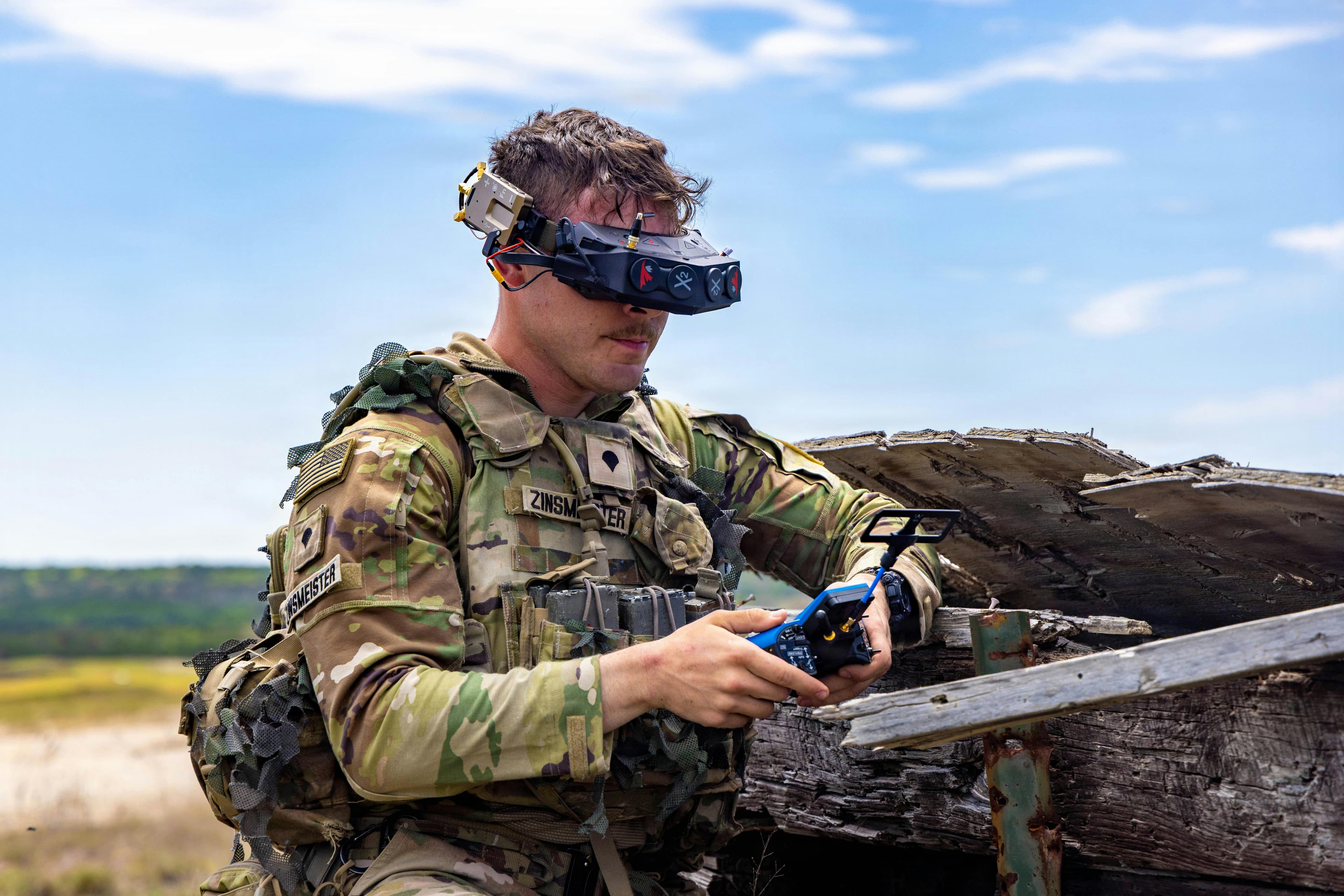
In the drone sector, the quality of sensor technology often directly determines mission success or failure. From tactical reconnaissance drones to long-range strategic platforms, the demand for sensors that are smaller, lower in power consumption, and higher in resolution continues to grow—driving rapid expansion in related supply chains and R&D investment.
Taken together, the nature of modern warfare is undergoing a profound transformation. Platforms may serve merely as carriers, but it is sensor capability and data integration that ultimately decide who prevails on the battlefield.
原文來源: 查看原文
FAQ
Newsletter
Subscribe to our Low-Altitude Industry Newsletter
Daily curated news on low-altitude economy and drone industry, delivered to your inbox.