China Deploys New HQ-16F Air Defense Missile Opposite Taiwan, Range Doubled to 160 km
China has begun deploying the HQ-16F surface-to-air missile system with PLA Eastern Theater Command forces. The latest variant of the HQ-16 family boasts a range of approximately 160 km — more than double its predecessors — and integrates an AESA fire-control radar with active/semi-active radar terminal guidance. The deployment extends Beijing's defensive coverage across much of the Taiwan Strait and fills a mid-tier gap in China's layered integrated air defense network.

Highlights
- China has deployed the HQ-16F SAM with PLA Eastern Theater Command forces, positioning the system directly opposite Taiwan.
- The HQ-16F achieves a 160 km intercept range — more than double the 70 km range of the HQ-16B/C variant.
- The missile adopts a near-wingless aerodynamic design and integrates an AESA fire-control radar with active/semi-active radar terminal guidance to improve tracking and electronic-warfare resistance.
- A vehicle-mounted vertical launch system with six ready rounds enables 360-degree engagement without repositioning the launcher, reducing reaction time.
- The HQ-16F fills the medium-range gap between China's long-range HQ-9 batteries and short-range point-defense systems, extending IADS coverage across much of the Taiwan Strait.
China Deploys New HQ-16F Air Defense Missile Opposite Taiwan, Range Doubled to 160 km
China has begun fielding the HQ-16F surface-to-air missile (SAM) system with People's Liberation Army (PLA) Eastern Theater Command forces, positioning an upgraded air-defense interceptor directly opposite Taiwan.
The system represents a significant evolution of the long-running HQ-16 family, extending intercept range while integrating newer radar and guidance technologies. Viewed in broader context, the deployment reflects Beijing's sustained push to deepen its layered air and missile defense capabilities around the Taiwan Strait.
What Is the HQ-16F?
The HQ-16F is the latest development of China's HQ-16 medium-range SAM family. Tracing its lineage to Soviet Buk missile concepts, the HQ-16 has been deployed with front-line PLA units tasked with intercepting aircraft, cruise missiles, and precision-guided munitions approaching from the direction of Taiwan.
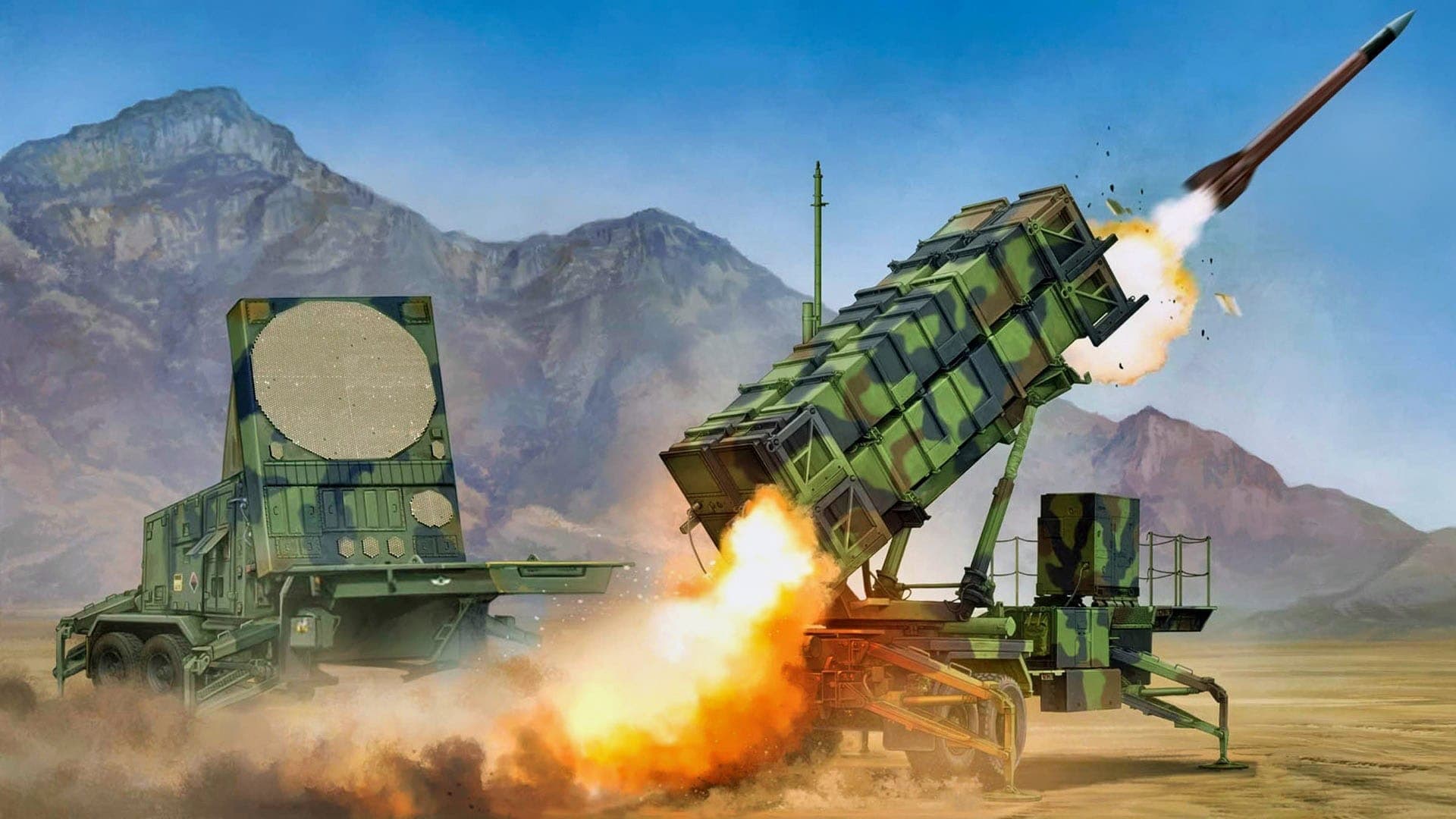
The F-variant delivers a substantial range upgrade. The HQ-16A had a range of 40 km; the HQ-16B/C extended that to 70 km; the HQ-16F reaches approximately 160 km — more than twice the reach of earlier models. That extended envelope allows a single battery position to defend a considerably larger area.
Key Technical Upgrades
Earlier variants of the missile featured pronounced mid-body fins. The HQ-16F adopts a slender, near-wingless aerodynamic configuration that reduces drag, improves energy retention, and enhances range and flight efficiency. The aerodynamic redesign is cited as a primary driver of the range increase.
The guidance suite has also been upgraded. The HQ-16F integrates an AESA (Active Electronically Scanned Array) fire-control radar, inertial mid-course guidance, and active/semi-active radar terminal guidance. These improvements are intended to enhance target-tracking fidelity, increase resistance to electronic warfare, and improve intercept performance against low-observable targets.
The system is deployed on wheeled vehicles fitted with a vertical launch system (VLS). Each VLS canister holds six ready rounds and can engage threats across a full 360-degree arc without rotating the launcher, significantly reducing reaction time against multi-axis threats.
Why Deploy It Opposite Taiwan?
The strategic rationale is defensive in nature: protecting coastal staging areas, logistics hubs, command facilities, and troop concentrations during a potential cross-strait contingency. A broader defensive umbrella complicates precision-guided rocket artillery and missile strike operations.
The HQ-16F is not designed to operate in isolation. It is integrated into China's wider Integrated Air Defense System (IADS), working alongside longer-range systems such as the HQ-9 and other interceptors. Beijing's goal is to create overlapping engagement zones that force any incoming aircraft or missile to penetrate multiple defensive layers rather than a single intercept tier.
Strategic Implications
With a 160 km engagement envelope, the HQ-16F allows China to project defensive coverage from mainland positions across much of the Taiwan Strait. Improved intercept capability may also raise the cost of strike operations against Chinese military infrastructure on the mainland, potentially forcing adversaries to contend with denser air defense coverage.
The deployment is consistent with China's broader Anti-Access/Area Denial (A2/AD) posture, adding a layer on top of existing coastal defenses rather than replacing high-end systems.
Specifically, the HQ-16F is designed to occupy the middle tier of China's increasingly robust layered IADS. The HQ-9 anchors the high end, intercepting aircraft and missiles at long range. Short-range systems cover the low end, protecting military bases, logistics nodes, and mobile forces against drones, helicopters, and low-altitude cruise missiles. The HQ-16F fills the gap between these two tiers, extending medium-range coverage while providing additional intercept opportunities.
The deployment also illustrates China's preference for modernization over replacement: rather than designing an entirely new missile family, Beijing continues to upgrade existing platforms with improved aerodynamics, electronics, sensors, and software, expanding operational capability while leveraging established production infrastructure.
Nevertheless, the HQ-16F is far from a routine missile upgrade. With substantially extended range, an improved radar and guidance package, and vertical launch capability, this new interceptor signals that China is actively increasing the density and coverage of its layered air defense network opposite Taiwan. The deployment makes clear that Beijing remains committed to making the airspace around the Taiwan Strait progressively more challenging for adversary aircraft and precision-guided munitions.
This article was authored by Harrison Kass, a writer and attorney specializing in national security, technology, and political culture. He holds a J.D. from the University of Oregon School of Law and an M.A. from New York University's Graduate School of Global and Joint Studies.
原文來源: 查看原文
FAQ
Newsletter
Subscribe to our Low-Altitude Industry Newsletter
Daily curated news on low-altitude economy and drone industry, delivered to your inbox.